
EV Charging Earns Nearly $1 Billion In Investments In California, New York
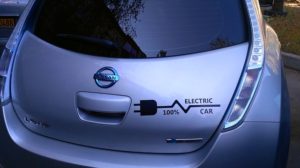
By Frank Andorka, Senior Correspondent There just might be something to this electric vehicle (EV) revolution after all – at least New York and California seem to think so. Greenbiz is reporting that between the two states, nearly $1 billion will be spent adding EV-charging stations to the nation’s infrastructure. In California, more than $750 million of public money is being invested in three of the state’s largest utilities, while in New York $250 million is being allocated to the New York Power Authority (NYPA). As the invaluable Katie Fehrenbacher notes in her article, the decision to invest with utilities … Read More
Chinese Solar Market Suffers Severe Setback As Government Slashes Subsidies, Projects

By Frank Andorka, Senior Correspondent The South China Morning Post reports a Chinese solar market in freefall after the government decided it would no longer fund new solar farms and slashed subsidies to solar electricity users by almost 10%. According to the paper, the government says the move is designed to wean the Chinese solar market off of government subsidies and put it on a more “sustainable path.” The Post wrote: A joint statement put out on Friday by the National Development and Reform Commission, Ministry of Finance and National Energy Administration said, “The measures are aimed at “promoting the … Read More
Wisconsin Utilities Agree To Add 300 MW Of Solar To Portfolios

By Frank Andorka, Senior Correspondent Get ready for 300 MW of solar projects coming your way, Badger State. Two of the state’s utilities – Madison Gas and Electric (MGE) and WEC Energy Group (WEC), through its Wisconsin Public Service (WPS) – will be partners in two projects in the state. The projects will be developed Invenergy and NextEra Energy Resources, according to applications filed with the Public Service Commission of Wisconsin (PSCW) at a cost of approximately $390 million. If approved by the end of 2018, construction of both projects is expected to begin by spring 2019, with both plants … Read More
Iron Mountain Joins RE100 and Commits to Setting Science Based Targets for Carbon Reductions
Iron Mountain® Incorporated (NYSE: IRM), the global leader in storage and information management services, today announced two important environmental commitments that significantly advance the company's efforts to reduce its carbon footprint and increase its usage of renewable energy around the world. Firstly, Iron Mountain is joining the RE100 initiative, a collaborative, global platform developed by The Climate Group, an independent, not-for-profit organization working internationally with government and business leaders to advance smart policies and technologies to cut global emissions and accelerate a low carbon economy. Iron Mountain joins more than 130 multinational corporations in committing to a shift to using renewable energy sources for 100 percent of its worldwide electricity. In doing so, Iron Mountain pledges to follow a rigorous standard for green power purchasing and achieving aggressive interim milestones on the way to a complete conversion by 2050. Secondly, Iron Mountain announced its commitment to set an aggressive science-based target for carbon reduction by the end of 2019. In doing so, the company will work with the Science Based Targets Initiative (SBTi), which helps companies determine how much they must cut emissions to do their part to address climate change, to calculate and approve a reduction in carbon from current levels. This promise puts the company on a trajectory for decarbonizing its operations in line with the global goals of the Paris Climate Accord. "We applaud Iron Mountain for taking these important steps to address climate change," said Mindy Lubber, CEO and president of Ceres, a sustainability nonprofit organization working with the most influential investors and companies to build leadership and drive solutions throughout the economy. "By committing to 100 percent renewable electricity and setting an ambitious science-based carbon-reduction target, Iron Mountain is joining a growing number of major companies that understand the huge economic benefits and clear competitive advantage of climate action." In Iron Mountain's recently released 2017 Corporate Responsibility Report, the company reports achieving an absolute reduction of 6.6 percent in year-over-year carbon emissions – even during a period of continued business growth and service expansion. Iron Mountain is also a member of several collaborative efforts to advance the use of renewable energy including the renewable energy buyer's alliance (REBA) a collaboration of World Wildlife Fund, World Resource Initiative, Rocky Mountain Institute and Business for Social Responsibility. The company is a signatory to the Renewable Energy Buyers Principals, a member of the EPA Green Power Partnership and recipient of the 2017 Green Power Leadership Award. "We're proud to be among the earliest adopters of renewable energy," said William Meaney, president and chief executive officer of Iron Mountain. "Understanding the impact of our energy usage has led to the adoption of energy and greenhouse gas reduction strategies that are helping the company save money, reduce environmental impacts and better serve our customers. In making these commitments today, we are setting aggressive public goals with the endorsement of well-respected non-profit organizations, accelerating our efforts to foster strong economic growth while operating as a responsible, ethical and sustainable company."
Iron Mountain® Incorporated (NYSE: IRM), the global leader in storage and information management services, today announced two important environmental commitments that significantly advance the company’s efforts to reduce its carbon footprint and increase its usage of renewable energy around the world. Firstly, Iron Mountain is joining the RE100 initiative, a collaborative, global platform developed by The Climate Group, an independent, not-for-profit organization working internationally with government and business leaders to advance smart policies and technologies to cut global emissions and accelerate a low carbon economy. Iron Mountain joins more than 130 multinational corporations in committing to a shift to using … Read More
UPDATE: Trump Throws Free Market Principles Out Window On Behalf Of Coal, Nuke Plants
This article has been updated to reflect that President Trump has in fact given the order rather than just considering it. By Frank Andorka, Senior Correspondent Well, that’s not very free market of him. In a move that made George Gilder do a spit take, President Donald J. Trump has ordered the Energy Department to instruct grid operators to purchase electricity from failing coal and nuclear plants in an effort to keep such faltering plants alive and well, according to the Associated Press. [wds id=”3″] Earlier today, Bloomberg indicated such a move might be imminent, citing a memo it reviewed … Read More
The Energy Show: John Farrell on Why It Costs More For Utilities to Sell Power
For over a hundred years our civilization has been getting electricity from centralized generation. This utility business model relies on remote power plants fueled originally by coal, oil and gas — and now increasingly by wind and solar. But the development of inexpensive rooftop solar power over the past 20 years is changing this central generation paradigm. It is now cheaper for homes and businesses to generate their own electricity on their rooftop, and only stay connected to the utility for night time power. These Distributed Generation (DG) solar power systems are connected on the customer’s side of the meter, or referred to as Behind the Meter (BTM) from a utility’s perspective. Utilities generate their profits by selling power, as well as owning the power plants and utility power lines. When customers generate their own power, utilities lose revenues. Moreover, when customers pay for their own solar generating systems, utilities do not get to own additional generating assets – further reducing their profits. This loss of revenues and profits is disrupting the conventional Investor Owned Utility (IOU) business. Utilities claim that there are costs being shifted from solar customer to non-solar customers. This cost shift argument is nonsense, since in reality the utilities are trying to regain their lost profits from solar customers by increasing rates for everyone else. Think about it: since utility customers are going elsewhere for the utility’s product (electricity), utilities are raising prices for everyone else. Nice work if you can get it. The trend towards BTM solar (and now battery storage) is inexorable as these technologies continue to get cheaper. The aptly named Institute for Local Self Reliance (ILSR) focuses on these technology and sociological transitions. Our guest on this week’s Energy Show is John Farrell. John directs the energy program at ILSR and is best known for his research and papers on economics and benefits of local ownership of decentralized renewable energy. John is one of our best thinkers and communicators on this subject, so Listen Up to this week’s Energy Show for his commentary on the superior economics of Behind the Meter solar and storage. https://soundcloud.com/theenergyshow/john-farrell-on-why-it-costs-more-for-utilities-to-sell-power-1
For over a hundred years our civilization has been getting electricity from centralized generation. This utility business model relies on remote power plants fueled originally by coal, oil and gas — and now increasingly by wind and solar. But the development of inexpensive rooftop solar power over the past 20 years is changing this central generation paradigm. It is now cheaper for homes and businesses to generate their own electricity on their rooftop, and only stay connected to the utility for night time power. These Distributed Generation (DG) solar power systems are connected on the customer’s side of the meter, … Read More
Trump To Throw Free Market Principles Out Window On Behalf Of Coal, Nuke Plants
By Frank Andorka, Senior Correspondent Well, that’s not very free market of him. In a move that made George Gilder do a spit take, President Donald J. Trump may soon order grid operators to purchase electricity from failing coal and nuclear plants in an effort to keep such faltering plants alive and well, according to a Bloomberg report. [wds id=”3″] A memo reviewed by the news organization says the Energy Department is considering using its power under the Federal Power Act – Section 202 powers, to be exact – to use emergency powers to take such action. Bloomberg called the … Read More
NV Energy Unveils Massive Solar, Storage Plans

By Frank Andorka, Senior Correspondent NV Energy, Nevada’s largest utility, unveiled plans to add more than 1 GW of solar power and at least 100 MW of battery storage in its latest Integrated Resources Plan (IRP), filed today with the Public Utilities Commission of Nevada (PUCN). The new projects will be evenly distributed throughout the state, with three new plants located in the north and three located in the south, pending the plan’s approval by the PUCN. [wds id=”3″] “The six new projects position NV Energy to keep its commitment to double renewable energy by 2023 and, importantly, by diversifying … Read More
Minnesota Forges New Rules For Easier Clean-Energy Interconnection

By Frank Andorka, Senior Correspondent The Minnesota Public Utilities Commission (MPUC) decided last week to make significant changes to its interconnection procedures in an effort to make it easier for clean-energy customers to connect to the grid. Despite its reputation as being the Midwestern leader in community solar development, outdated interconnection rules had slowed the progress of community solar garden growth and caused frustration among solar advocates within the state. With the help of he Interstate Renewable Energy Council (IREC), Fresh Energy and the Environmental Law & Policy Center (ELPC), the MPUC has adopted more straightforward rules and procedures that … Read More
Are Renewables Being Targeted In Illinois Despite Public Support?
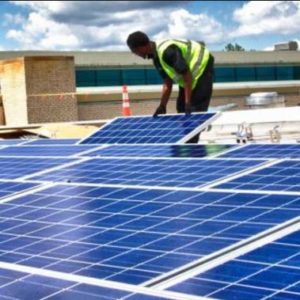
By Frank Andorka, Senior Correspondent The legislature giveth with one hand and seems poised to taketh away with the other hand from the Illinois renewable energy providers. Despite a recent survey by CleanChoice Energy that shows 83% of Illinois residents want to have the choice of clean energy as an option to supply their homes and state-sponsored support under the Future Energy Jobs Act of 2016, action in the legislature later this week could diminish solar’s growth considerably if two amendments to SB 1531 are passed as part of the bill. At issue is the idea of “automatic renewals,” a … Read More