

By Frank Andorka, Senior Correspondent What Happened:Utility Dive has an excellent piece describing the 88% difference in two VOS studies, one in Montana and one in Maryland.
By Frank Andorka, Senior Correspondent What Happened:Utility Dive has an excellent piece describing the 88% difference in two VOS studies, one in Montana and one in Maryland.
 Is the image of the sun setting on a utility pole too heavy handed? I worry it's a little heavy handed.[/caption]
SolarWakeup’s View: Let's get this out of the way first: Go read the Utility Dive explanation of two value-of-solar studies - one in Montana, the other in Maryland - which come to two deeply different conclusions about how solar should be valued when it comes to net metering and other compensation structures. It is excellent, and it is detailed. I could not do a better job myself.
But I want to look at one factor that UD slides over that may be the single-biggest determining factor in why, according to the two studies, solar is 88% more valuable in Maryland than in Montana. That factor is who paid for the study.
Is the image of the sun setting on a utility pole too heavy handed? I worry it's a little heavy handed.[/caption]
SolarWakeup’s View: Let's get this out of the way first: Go read the Utility Dive explanation of two value-of-solar studies - one in Montana, the other in Maryland - which come to two deeply different conclusions about how solar should be valued when it comes to net metering and other compensation structures. It is excellent, and it is detailed. I could not do a better job myself.
But I want to look at one factor that UD slides over that may be the single-biggest determining factor in why, according to the two studies, solar is 88% more valuable in Maryland than in Montana. That factor is who paid for the study.
By Frank Andorka, Senior Correspondent What Happened:The Tennessee Valley Authority (TVA), in an action that seems antithetical to its entire mission, imposed a grid-access fee on its customers, aimed specifically at solar users because of the zombie lie of the cost-shift.
By Frank Andorka, Senior Correspondent What Happened:The Tennessee Valley Authority (TVA), in an action that seems antithetical to its entire mission, imposed a grid-access fee on its customers, aimed specifically at solar users because of the zombie lie of the cost-shift.
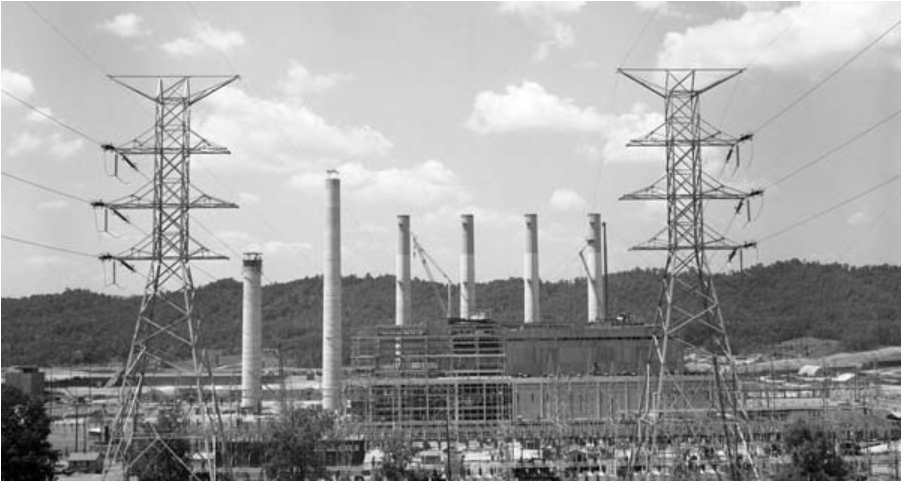 The TVA USED to be about electricity for all. Now it's about "electricity, but we're going to charge you a random grid-access fee for it."[/caption]
SolarWakeup’s View: This flippin' zombie lie is back again, this week popping its head up from the depths of hell in the Tennessee Valley.
The Tennessee Valley Authority (TVA), for those who don't know, was established as part of President Franklin Roosevelt's New Deal program, in part to bring electricity to rural areas of seven states. These areas weren't served before because it was considered too expensive for traditional utilities to string wires to many of these areas off the beaten path.
It revolutionized the United States and gave rise the New South. But now, the TVA is relying on the zombie lie of the "cost shift" to penalize anyone on their grid that wants to install solar with a usurious "grid-access fee."
The TVA USED to be about electricity for all. Now it's about "electricity, but we're going to charge you a random grid-access fee for it."[/caption]
SolarWakeup’s View: This flippin' zombie lie is back again, this week popping its head up from the depths of hell in the Tennessee Valley.
The Tennessee Valley Authority (TVA), for those who don't know, was established as part of President Franklin Roosevelt's New Deal program, in part to bring electricity to rural areas of seven states. These areas weren't served before because it was considered too expensive for traditional utilities to string wires to many of these areas off the beaten path.
It revolutionized the United States and gave rise the New South. But now, the TVA is relying on the zombie lie of the "cost shift" to penalize anyone on their grid that wants to install solar with a usurious "grid-access fee."
"Some consumers, particularly the more able ones, can invest some solar panels or other resources, but they still rely on the valley-wide transmission system for backup power," Johnson said. "The result is how we bill for electricity can be out of sync with the actual costs of getting electricity to some consumers."How many times do we have to kill this damn lie about how solar consumers supposedly "shift" costs on to non-solar users? (Forever, Frank, you idiot - that's the whole point of zombies.....) The argument goes like this: Retail-rate net metering, a program under which solar customers are reimbursed for the excess electricity they produce, pushes extra costs on to non-solar customers because solar customers aren’t paying for grid upkeep. What the utilities don’t want you to notice, of course, is that solar customers also relieve congestion on the grid during peak production times, which saves strain on the transmission and distribution lines. So while they may not be paying for upkeep directly, solar production saves wear and tear, which ultimately saves the utility money in the form of repair costs. You’re welcome. I should note here that while there is a minor cost-shift, a study by the Lawrence Berkeley National Laboratory indicates the shift only happens when a state passes the 10% mark for solar-electricity generation. And I should also note that even at more than 10%, the shift is so small you’d need the Berkeley Lab’s $27 million electron microscope to see it. As it always is, this maneuver is nothing more than a power and money grab by a rapacious utility - and it looks like the zombie lie going to succeed (again) in eating into the savings solar consumers should have from installing their systems. More: TVA adopting grid access fee in move to impose more fixed costs on power bills
The payoff. Nathan Arbitman of DSM Advanced Solar was the winner of the SolarWakeup Bracket Challenge for March Madness. Read his post about the work he is doing in today’s top story. Have a great weekend!
The PV Innovation Race is On. Like many of you, I’ve committed my career to the cleantech industry because of the moral imperative to accelerate the clean energy revolution, as well as the unprecedented wealth creation opportunity this transformation brings. And I’m always asking myself, how we can make this transition happen even faster? I joined DSM Advanced Solar, a leading PV technology provider, to create build provocative and powerful partnerships that accelerate value creation in the PV market. DSM is working with partners of all shapes and sizes to drive science-based innovation— how might we work together to accelerate your company’s growth?
Political Chaos Leads To Success. In a different world, Nevada never guts the solar market. There isn’t a deep fight, with lawsuits, that completely annihilates the solar industry. Instead, a settlement is reached that leads to slowdown but things stay in place. Which scenario would have a better solar market today? That’s my question for Connecticut today. How hard are you willing to fight? Politics is a full contact sport, don’t be a spectator.
New Pod. Don’t forget you can get Barry Cinnamon’s podcast, The Energy Show, right here on SolarWakeup.
Need To Explain? Two value of solar reports. Two States. Two Results. Do I really need to tell you why that happens? #utilities
Opinion
News
Opinions:
Have a great day!
Yann
Battery storage is roughly where the solar industry was in the early 2000s. It’s a tiny market now but it is exploding and the technology is evolving rapidly. There is money saving potential for customers but there are risks for incumbent energy providers who are pushing back. The standards are changing like quicksand and investor funds are pouring in to take advantage of this inevitable market. The rapid “hockey stick” growth that we are seeing in the energy storage industry is likely to be even more accelerated than the growth of the solar industry.
Battery storage is roughly where the solar industry was in the early 2000s. It’s a tiny market now but it is exploding and the technology is evolving rapidly. There is money saving potential for customers but there are risks for incumbent energy providers who are pushing back. The standards are changing like quicksand and investor funds are pouring in to take advantage of this inevitable market. The rapid “hockey stick” growth that we are seeing in the energy storage industry is likely to be even more accelerated than the growth of the solar industry.