The Energy Show – Regional Energy Policy Leadership with Tim McRae

The Energy Show with Barry Cinnamon

Public policies have a tremendous influence on the energy we use, as well as the condition of our environment. State and Federal legislators make these policies with input from private citizens and businesses. The solar industry quite frankly has thrived with policies in favor of clean renewable energy, and it’s no accident that California is a leader in solar and clean renewable energy.

The Silicon Valley Leadership Group (SVLG) helps advocate for favorable business and citizen policies in Silicon Valley and they have made a tremendous impact not only in California but also in Washington DC.

Interest Rates Are Rising, But Solar Is Still A Good Investment (For Now)

By Frank Andorka, Senior Correspondent

What Happened:Bloomberg Technology reports that despite rising interest rates, banks are still finding money to invest in solar.

  • According to Bloomberg, “While the cost of borrowing has been increasing since 2016, some banks are taking a smaller cut to win deals from solar developers.
  • How long solar is able to withstand the headwinds of higher costs of capital remains to be seen.
  • interest rates

    Money is still available for solar projects despite rising interest rates – at least for now.

    SolarWakeup’s View:  Interest rates are on the rise after years at being near zero. While normally such increases in capital costs would inhibit investments in solar projects, Bloomberg Technology (BT) reports that is not the case – at least for now.

    [wds id=”3″]

    The reason, BT suggests is that banks are now looking at solar as a much safer investment than in the past, which means they are lowering their solar risk factors. In essence, the rise in interest rates is being canceled out because the banks are charging less of a premium because it is considered less risky than in the past.

    BT also notes that fewer projects available this year, thanks in part to last year’s uncertainty engendered by the trade dispute with the rest of the world. Fewere companies were willing to commit to projects this year as a result – meaning for those banks interested in adding solar to their portfolio, there’s more competition to land them. The competition, combined with more comfort with the solar as an investment class, is keeping costs lower.

    But….and you knew there was a “but” coming, right?

    The unanswered question in BT’s piece is how long the atmosphere will remain this solar-friendly. After all, BT predicts more projects will enter the pipeline starting in 2019, meaning the balance of power between projects and available cash will once again shift in the lender’s direction. And while solar is increasingly considered a safer investment than it once was, it is not as safe as, say, U.S. Treasury bonds. If interest rates are 8% on a solar investment with some risk but 4% or 5% on bonds with virtually no risk, will investors still choose solar?

    Those questions, for now, are in the future. For now, money is still flowing into solar as investors have become more comfortable with the investment class – and that’s good news for everyone.

    More:

    Banks Are Sweetening Their Terms for Solar as Confidence Rises

    Florida Public Service Commission OKs Sunrun’s Petition – So It’s Full Speed Ahead

    By Frank Andorka, Senior Correspondent

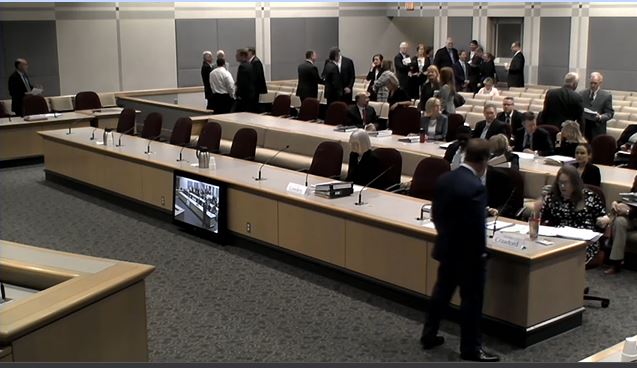
    What Happened:On a vote of 5-0, the Florida Public Service Commission has approved Sunrun’s request that its third party leases not be considered a sale of electricity and that:

  • Offering its solar equipment lease to customers in Florida will not cause Sunrun to be deemed a public utility under Florida law;
  • The residential solar equipment lease described in its petition will not subject Sunrun or Sunrun’s customer-lessees to regulation by the Commission.
  • Florida Public Service Commission

    SolarWakeup’s View:  In a victory for third-party leasing in the state of Florida, Sunrun has JUST been granted the right to sell its products in the state of Florida.

    [wds id=”3″]

    Sunrun asked the Florida Public Service Commission in Decemeber to declare that its third-party ownership business model wouldn’t instantly make them a regulated utility or penalize their customers under the same rules. The Commission voted unanimously to approve the staff recommendation.

    The unanimity of the decision was surprising, given the legendary power of the utilities in the state. Some observers fully expected a decision on the petition to be postponed for more discussion, even after Sunrun voluntarily submitted a copy of its lease in March for the commission to peruse.

    During the brief discussion, Sunrun was asked about its Florida website and whether homeowners had access to it, to which Sunrun responded that they would once the company started operating in the state officially (which, it should be noted, required passage of the declatory statement the company requested).

    Now that Sunrun has blazed the trail, I’d expect more third-party leasing companies to flood the state. After all, a 2008 report from the Florida Public Service Commission suggested there is the potential of a 52 GW solar resource in Florida that is not currently being exploited.

    “The Commission’s vote to grant our petition is a critical step toward broadening access to solar energy for Floridian households,” said Anne Hoskins, chief policy officer of Sunrun. “We are grateful for the time the Commission and technical staff spent promptly reviewing our petition and our Florida lease product and look forward to bringing additional solar energy choice to more people in the Sunshine State soon.”

    “Sunrun is delighted to now be able to offer Floridians the opportunity to lease a solar system, enabling them to have clean, reliable, affordable solar power for their homes,” said Lynn Jurich, CEO and co-founder of Sunrun.

    This article was edited at 10:45 am on 4/20/2018 to add comments from Anne Hoskins, chief policy officer of Sunrun.

    This article was edited at 1:48 pm on 4/20/2018 to add comments from Lynn Jurich, CEO and co-founder of Sunrun.

    More:

    FPSC Staff Recommendation:

    StaffReport

    Original Sunrun Petition

    OriginalSunrunPetition

    Don’t Let Utility-Scale Solar Be Used As A Fig Leaf

    By Frank Andorka, Senior Correspondent

    What Happened:Sammy Roth of The Desert Sun is one of my mainstream solar writers, and he takes a fascinating look at the Trump Administration’s decision to reopen the Desert Renewable Energy Conservation Plan.

    • The Trump Administration and Secretary of the Interior Ryan Zinke talk about reopening the Desert Renewable Energy Conservation Plan, which was finished in 2016 and was designed to balance environmental protection and renewable-energy development.
    • But even the large-scale solar developers are suspicious of Trump’s motives behind the plan reconsideration.

    fig leaf

    SolarWakeup’s View:  First off, read the whole Sammy Roth article that I link to at the end of this. On top of it being a great topic, Sammy’s writing veritably sings.

    But even after reading his excellent piece, I’m left wondering (primarily because Sammy’s too good a reporter to offer his opinion and his sources are frankly as confused as I am): What exactly is the Trump Administration’s end game here as they reopen the settled discussion the Desert Renewable Energy Conservation Plan? And is utility-scale solar being used as a fig leaf for something far more nefarious?

    [wds id=”3″]

    Read Sammy’s piece to get the whole background on the Plan, but essentially it was a negotiated agreement under the Obama Administration that attempted to find a balance between environmental protection and renewable-energy development in the California desert. Some large-scale solar advocates, along with the Solar Energy Industries Association, submitted a letter asking that some parts of the plan be modified – administratively – to clarify where and when renewable energy projects can be developed on the land, the merits of which could be debated, I suppose.

    But what’s weird to me – and probably to most other people reading this article – is that the Trump Administration isn’t talking about making incremental changes. It’s talking about completely renegotiating a deal that took more than eight years to negotiate in the first place. So the question before the jury is this: What is Ryan Zinke’s (and the Trump Administration’s) end game here? What are they really opening up this agreement to accomplish?

    Trump clearly isn’t interested in doing the “bidding” of large-scale solar, given that he has little understanding of the technology and little curiosity to learn. So he’s using large-scale solar (and, to be fair, wind) development as a fig leaf to open up this precious ecosystem for something else.

    The solar developers out there have gotten really good at developing their projects on land other than property that would disturb the environment. After all, who are we as an industry if we’re not protecting the environment while also making money?

    The solar industry skepticism expressed in the article is fitting – and it should be something on which we all keep our eyes. We can’t let ourselves be used as a fig leaf to cover up something that ends up being antithetical to our values.

    More:

    The Trump vs. California environmental fight nobody’s talking about