

By Frank Andorka, Senior Correspondent What Happened:Varun Sivaram, the Philip D. Reed Fellow for Science and Technology for the Council on Foreign Relations, builds several admirable straw men to flog, including these nuggets of what apparently passes for wisdom at The Brookings Institute and The Washington Post:
By Frank Andorka, Senior Correspondent What Happened:Varun Sivaram, the Philip D. Reed Fellow for Science and Technology for the Council on Foreign Relations, builds several admirable straw men to flog, including these nuggets of what apparently passes for wisdom at The Brookings Institute and The Washington Post:
- Solar advocates are bad because they don't advocate for nuclear energy and carbon capture (nope, I got nothing).
- Solar advocates only want deployment, not research into new technologies (perovskite researchers, you might want to give Varun a call).
- Solar advocates have argued for tariffs, raising costs and stifling inovation (to paraphrase comedian Lewis Black, "What advocates, where?").
 SolarWakeup’s View: So much straw, so little burn time.
I'm not sure what Varun Sivaram has accomplished in his young career to have landed a prestigious position at Brookings and real-estate in The Washington Post, but if I had to guess I'd say is it's his willingness to construct straw men in an effort to offer an "opposing" viewpoint. In this case, Sivaram has decided to take solar advocates to task for:
SolarWakeup’s View: So much straw, so little burn time.
I'm not sure what Varun Sivaram has accomplished in his young career to have landed a prestigious position at Brookings and real-estate in The Washington Post, but if I had to guess I'd say is it's his willingness to construct straw men in an effort to offer an "opposing" viewpoint. In this case, Sivaram has decided to take solar advocates to task for: - not advocating for nuclear energy and carbon capture.
- only wanting deployment, not research into new technologies
- promoting protectionism.
By Frank Andorka, Senior Correspondent What Happened:Reviews of Enphase's Q1 2018 continue to be unusually positive, signaling that maybe its financial struggles may be receding in the rearview mirror.
By Frank Andorka, Senior Correspondent What Happened:Reviews of Enphase's Q1 2018 continue to be unusually positive, signaling that maybe its financial struggles may be receding in the rearview mirror.
- Roth Capital continued to cheerlead from the sidelines after switching the company's stock to a "buy" in February.
- And the North Bay Business Journal breathlessly reported that Enphase may finally be on the brink of profitability.
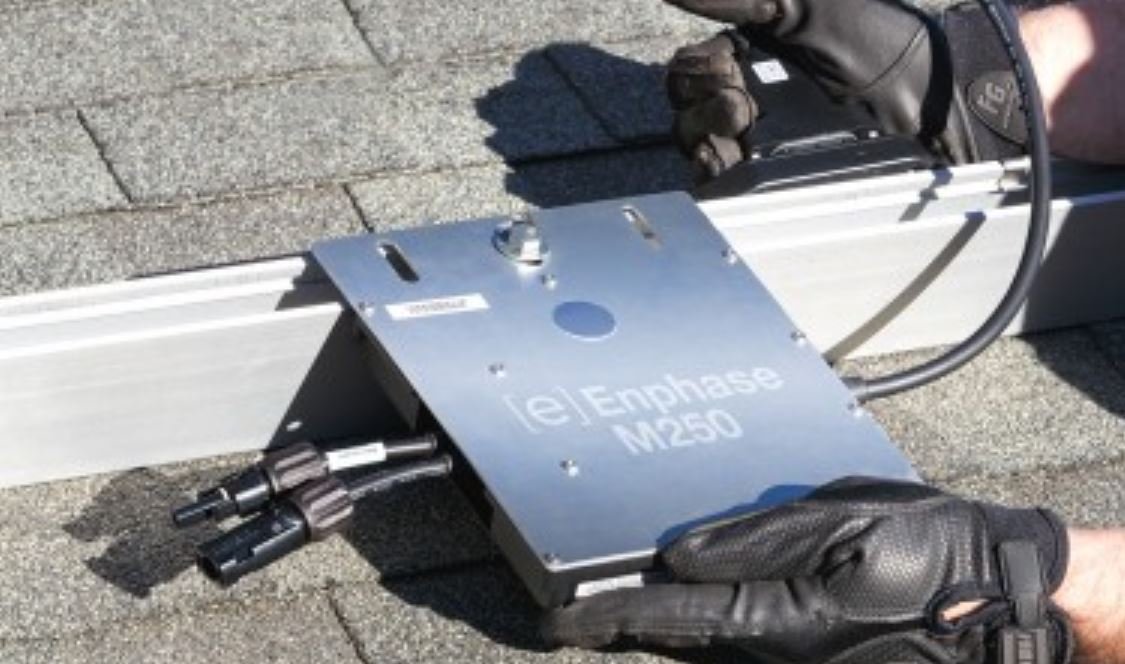 SolarWakeup’s View: For me, this is a nice-time story.
Solar Is Big Money. In 2018, the global solar market is going to top 100GW. That means more than $100 billion in total capital was committed to the market for 20 years of solar cashflows. In the US we likely stayed north of $20billion last year which is impressive on its own but we are getting to the point that global investors see the safety of the solar investment. There is still plenty of risk allocated to the market and room to lower the cost of capital. The margins remain on the pipeline side of the ledger, if someone can put land, interconnection and revenue together, they have created the value that will get them paid.
The Big Lyft. Lyft is targeting 1billion self driving electric vehicle rides by 2025, annually. Maybe that explains why Google’s energy director, Sam Arons, recently joined Lyft as the Director of Sustainability. Sam was often on the solar circuit talking about Google’s energy strategy and how the company would get to 100% renewable energy. I can only surmise that Lyft is thinking that the billion electric rides need to be powered with renewable energy. A corporate deal for a fleet of EVs?
Time For Retail Choice. Rocky Mountain Institute is out with a consumerism report using Green Mountain Power as the case study. The broader story here is the intermediate step before monopoly markets are deregulated and that is retail choice. This would be the allowance of third parties to serve as retail providers to consumers that wanted to enter into short term contracts for energy for the product and price they are willing to pay. Like picking a cable provider but for energy. Some legislation has been floating for this and gets pushed back quite a bit but it would be a great step forward if there is more traction on this issue.
Tuesday’s Mailbag. Thank you to the tremendous feedback about my comments from yesterday, which Frank covered in more detail. This reminds me of the arguments I was having with SEIA back in 2014 when SEIA wasn’t sure that it would support an ITC extension (yes, that happened) because some members weren’t supportive. It took the Solar Pledge and some marketing to get SEIA on board with the ITC extension and in this case it will take your voices to stop utilities from being members at SEIA, even as non-voting members. As I’ve urged those that have emailed me, make sure you let SEIA know how you feel.
Forest Through The Trees. This appears to be a bit of a scrivener’s error or at worst a silly way to stop distributed generation in California. EDF does a good job in shining the light on this.
Opinion
News
Opinions:
Have a great day!
Yann
By Frank Andorka, Senior Correspondent What Happened: Massachusetts' Supreme Judicial Court told Exxon it couldn't hide evidence it knew about global climate change (and its role in producing it) for years before they admitted it.
By Frank Andorka, Senior Correspondent What Happened: Massachusetts' Supreme Judicial Court told Exxon it couldn't hide evidence it knew about global climate change (and its role in producing it) for years before they admitted it.
- The ruling crushed Exxon's hopes of keeping the information from the state's attorney general, Maura Healey, who is currently investigating the company's alleged history of climate perfidy.
- As Think Progress notes, "In January 2017, a Massachusetts Superior Court judge ruled Exxon must comply with Healey’s investigation and turn over 40 years of documents on climate change. Exxon appealed.
 SolarWakeup’s View: When you're getting sympathy cards from Phillip Morris International and Reynolds American, you know you've suffered a pretty significant court loss.
...the Massachusetts Supreme Judicial Court on Friday affirmed a lower court’s ruling that state Attorney General Maura Healey has authority to investigate Exxon. The court ordered the oil company to hand over documents to the attorney general’s office as part of her investigation into the company’s history of climate deception. Healey and New York Attorney General Eric Schneiderman are both looking into whether Exxon misled shareholders about the risks that climate change posed to the company’s business.I recognize it's hard to stay focused on something like this with everything else that's going on in our world, but it's hard to underestimate its importance not just to the solar industry - although the significance there can't be undersold either - but to the world. I don't expect Exxon to pay any significant consequences, but maybe if Healey and Schneiderman can find evidence that the oil companies have known about climate change for 40 years, maybe I can stop having discussions with some of my relatives who still believe climate change is a Chinese hoax. And then maybe - just maybe - we can finally set about the business of fixing the problem instead of debating whether it's real. And I know the solar industry is ready to help. More: Massachusetts court rules in favor of attorney general in Exxon climate change case