

Strand My Assets, Not My Money. RMI is out with a report that outlines the long term investment thesis for new natural gas plants. Hint: it’s not good. The report finds that like many coal plants today, gas plants don’t provide the best financial return in the future and could find themselves pushed aside for financial reasons. This isn’t just a problem for private investors, consumers that finance these plants, guarantee their financial return, are the quasi investors within regulated monopoly areas. If this sounds familiar just look at the nuclear bailouts and requested coal bailouts in the news today.
Show Me The Wires. SEIA’s report on grid modernization makes the point that RMI found above. The future of energy will value the grid of the future. This means that more distributed generation will require a grid with less wires. Anything that ends up pushing energy from a central power plant to the loads will have a value that is significantly diminished. That future may be okay for solar and wind farms that have no exposure to fuel costs and volatility but it becomes harder for more traditional fuel. Distributed generation needs to be a central part of everything we do as a solar industry and that benefits even those that are not focused on DG.
Talk To Michael. There is a statement that comes up in some conversations with politicians. It doesn’t have to be said often because lobbyists get the process for political leaders very quickly. After a pitch on an issue with some politicians, emphasis on some, the elected will say something like, “that’s very interesting, I’d like to learn more, please talk to XYZ.” In Trump’s universe, it may have been “Talk to Michael.” At the very least, this is what one nuclear power plant was thinking and maybe solar should have been told to TTM. Of course I kid, mostly, I think.
Long Term Vision, Short Term Problems. 3 months go by very quickly and changing the energy market in 3 months increments is basically impossible. If access to capital is required in order to make that change work, then having to focus on the quarterly earnings makes that difficult. So how do we merge the desire for transparency in public companies with the hope to allow companies to change the norms.
Windy City, Sunny Market. Get your ticket for SolarWakeup Live! Chicago. Part of the event will be personal matchmaking between those that have projects or pipeline with those that have capital. The one day event you will not want to miss. solarwakeuplive.com
Opinion
News
Opinions:
Have a great day!
Yann
By Tony Clifford, CDO of Standard Solar As a general rule, it doesn’t hurt to be right—but when it comes to the devastating effects the Section 201 solar tariffs are having on the industry, I wish I’d been wrong. Last year, two foreign-owned companies held the U.S. solar industry hostage to their own selfish needs, and 9,800 people lost their jobs in 2017 alone. And I have to be blunt: 2018 has not gotten off to any better start. I’ve heard some so-called industry “experts” suggest the tariffs are having the desired effect, i.e. that solar manufacturing jobs are coming back to the United States. They point to a handful of companies that say they’re expanding their module factories and one new factory planned in Jacksonville, Florida, as evidence.
By Tony Clifford, CDO of Standard Solar As a general rule, it doesn’t hurt to be right—but when it comes to the devastating effects the Section 201 solar tariffs are having on the industry, I wish I’d been wrong. Last year, two foreign-owned companies held the U.S. solar industry hostage to their own selfish needs, and 9,800 people lost their jobs in 2017 alone. And I have to be blunt: 2018 has not gotten off to any better start. I’ve heard some so-called industry “experts” suggest the tariffs are having the desired effect, i.e. that solar manufacturing jobs are coming back to the United States. They point to a handful of companies that say they’re expanding their module factories and one new factory planned in Jacksonville, Florida, as evidence.
By Frank Andorka, Senior Correspondent
By Frank Andorka, Senior Correspondent
[caption id="attachment_9386" align="aligncenter" width="1280"]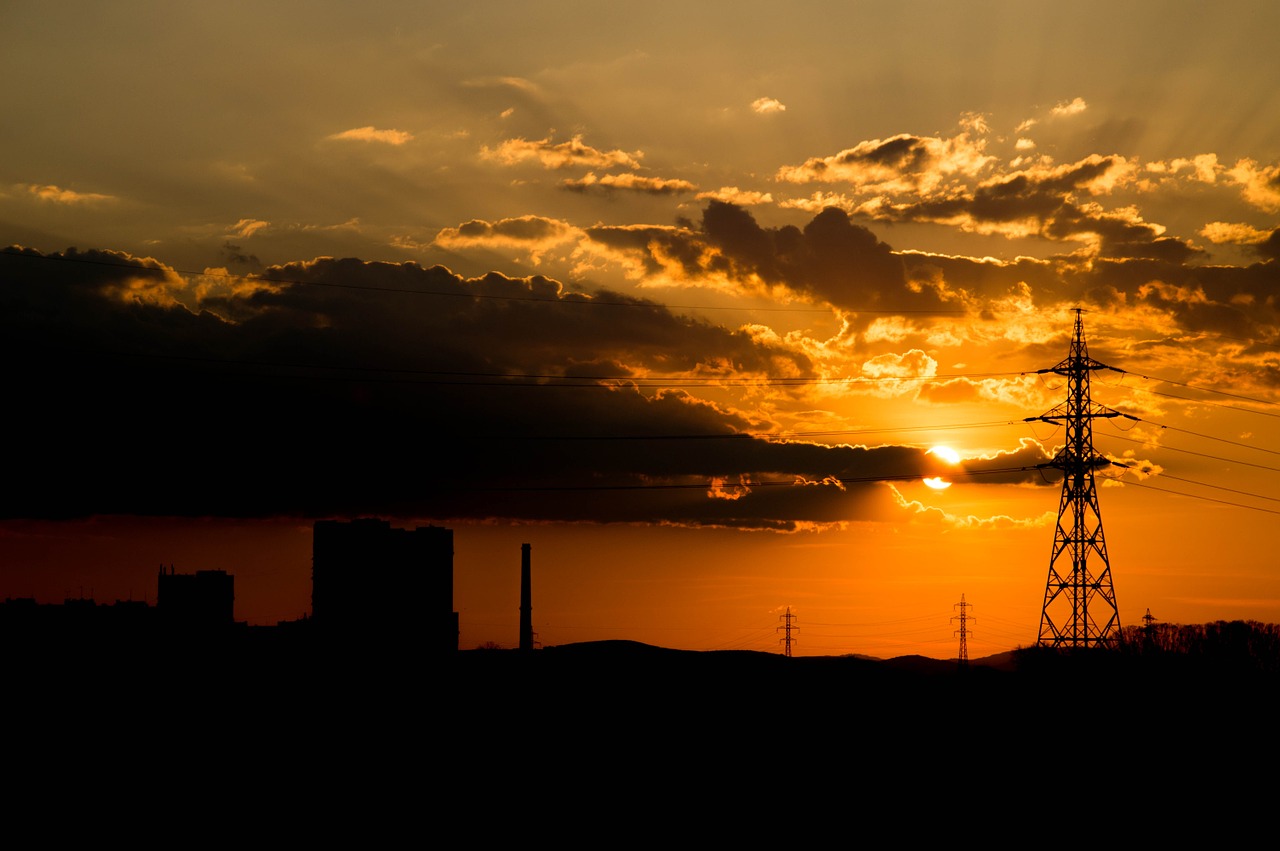 Is the image of the sun setting on a utility pole too heavy handed? I worry it's a little heavy handed.[/caption]
In the future, there will be no wires to hold down the transmission of electricity - at least that's what the Solar Energy Industries Association (SEIA) believes is part of the future of grid modernization, according to a white paper it released last week.
The paper , DER and the Non-Wires Solutions Opportunity, examined how utilities are investing in distributed electricity production instead of the traditional centralized model that has dominated grid development since the 19th century.
Is the image of the sun setting on a utility pole too heavy handed? I worry it's a little heavy handed.[/caption]
In the future, there will be no wires to hold down the transmission of electricity - at least that's what the Solar Energy Industries Association (SEIA) believes is part of the future of grid modernization, according to a white paper it released last week.
The paper , DER and the Non-Wires Solutions Opportunity, examined how utilities are investing in distributed electricity production instead of the traditional centralized model that has dominated grid development since the 19th century.
Q2 Sentiment Survey. The second quarter sentiment survey is up and running. Please take 30 seconds and answer these 5 questions and tell us how you feel. This is a survey for individuals so it doesn’t matter what role you play in solar. We will release the results at SolarWakeup Live! Chicago on June 21st, you should have your ticket already!
IOUs Getting Bigger. NextEra, the parent company of Florida Power & Light, is buying the Florida subsidiary of Southern Company, Gulf Power. Moreover it is acquiring several power plants that serve other Florida entities like Orlando and FMPA, which previously signed a solar PPA with NextEra.
Innovating The Midwest Energy. AEE is out with a memo to the gubernatorial candidates in Ohio. It outlines 5 points to consider in growing the advanced energy economy in Ohio, which just a few years ago had the potential of becoming a major solar market. It has solar success in the Youngstown area with the manufacturing base of First Solar and its series 6 rollout.
CA Solar Homes, Explained. When CA put in place a solar mandate on all new homes, the details are more nuanced than solar on every home in the State. I wasn’t planning on breaking it down, mostly because reading regulatory documents doesn’t fit into my calendar but I bring you the wonderful reporting from Julia Pyper. The details are detailed and I assure you, don’t start reading the breakdown without sufficient time. I never said it would be short!
Electrify Everything. Keyless entry. Air conditioned seats (I live in Florida). Regenerative braking. Adaptive cruise control. These are some of the features I want in my cars. They simply make the car a better driving experience and make our roads safer. Some of these features are part of why electric vehicles make for better modes of transportation and why the transition will speed up. When a city buys a new fleet of buses, why would they buy ICE? I don’t see it lasting much longer before all new fleet purchases are electric.
Helping AHJs. I wish that there was a way to speak to all AHJs overseeing solar at the same time. First, I’d like to make sure they are paying attention to the small details that make sure solar is installed properly without causing roof leaks or affecting the roof in a bad way. In the meantime we have IREC continuing the important work of teaching solar to AHJs.
Opinion
News
Opinions:
Have a great day!
Yann