

Have a great weekend. See you all in San Francisco next week and in Chicago the week following.
CUSTOMER Side Of The Meter. This may sound like NH’s Liberty Utility is acting with good faith but let’s be real. Anytime the utility wants to own equipment on your side of the meter, they are taking your ability to control your own energy usage away from you. This is the storage version of net metering, owning storage in rate base is one way to exert more control by the monopoly.
The Toll Trump Tariffs Take. Just the 201 tariffs are taking a massive toll on the industry. More than anything, it’s the uncertainty that it caused in an industry that is already struggling to keep its growth going. Every time someone mentions a company having problems to me, the joke quickly follows “Think they’ll file a 201 case?” The aluminum and steel tariffs are going to be a business planning issue as well. Hopefully the industry associations understand that these issues need to be resolved, quickly. The unknown is potentially worse than the result. So between 201, commodity tariffs, and coal bailouts, how many calls have you made to your representative?
Can CCAs Go National? As we see solar go below 3 cents per kWh, you would think that off takers would be on the prowl for more solar generation but that isn’t the case. A lot of new solar is going to the CCAs in California. Solar finance pros are ignoring (out of necessity) some of the credit issues but big solar means big dollars going into projects.
1970 Called, Wants Energy Policy Back. Take a moment and read this ridiculous article about the politics of energy in Trump world. Wouldn’t it be great if solar is the policy that gets Congress to work in a bipartisan way?
Presented By Chicago. Are you investing hundreds of millions into solar projects in Illinois? Make sure you know the rules and for $250, this is the best education you will get. solarwakeuplive.com for your tickets
Have a great day!
News
Opinions:
Have a great day!
Yann
By Frank Andorka, Senior Correspondent
By Frank Andorka, Senior Correspondent
Liberty Utilities, New Hampshire's largest utility currently has a docket before the New Hampshire Public Utilities Commission that sounds like a good idea. At issue is the state's largest pilot program in history that would allow New Hampshire solar users to install batteries at no cost to them. Sounds good, right? And although the intent of the program - to see how batteries will affect grid resiliency and performance - is pretty benign, solar advocates in the state have concerns about the size of the program and what it could mean for the long-term future of battery storage in the Granite State. After all, the proposal as it is currently written gives only customers with utility-owned batteries access to time-of-use rates or monthly peak reduction payments, meaning the goal of the pilot program isn't really to test how batteries operate on the grid. It's to give the utility an unnecessary monopoly on battery storage, which should be granted only when a clear market failure demands it. Instead of attempting to grab new monopoly powers where they don't clearly exist, advocates suggest that Liberty Utilities should scale back its own pilot program and let other companies - in some cases local companies employing New Hampshire citizens - compete on a "Bring Your Own Battery" system. In other words, set rates based on performance and let the market - not a state-sponsored monopoly - decide who should handle the solar + storage systems in the state. As it is, battery storage is something new for monopoly utilities in most cases (and most certainly in Liberty Utilities' case), whereas multiple companies in the private sector are already deploying solar + storage in many states, giving them insights into the particular challenges and opportunities such systems provide. Why should New Hampshire residents become the guinea pigs for a large-scale pilot program that would effectively shut out the competition? No one is suggesting Liberty Utilities shouldn't set up a pilot program or that that the NHPUC shouldn't grant them one. But make it a reasonably sized one that forces utilities to compete in the market - which would allow all ratepayers, solar consumers and non-solar consumers alike, to win.By Frank Andorka, Senior Correspondent
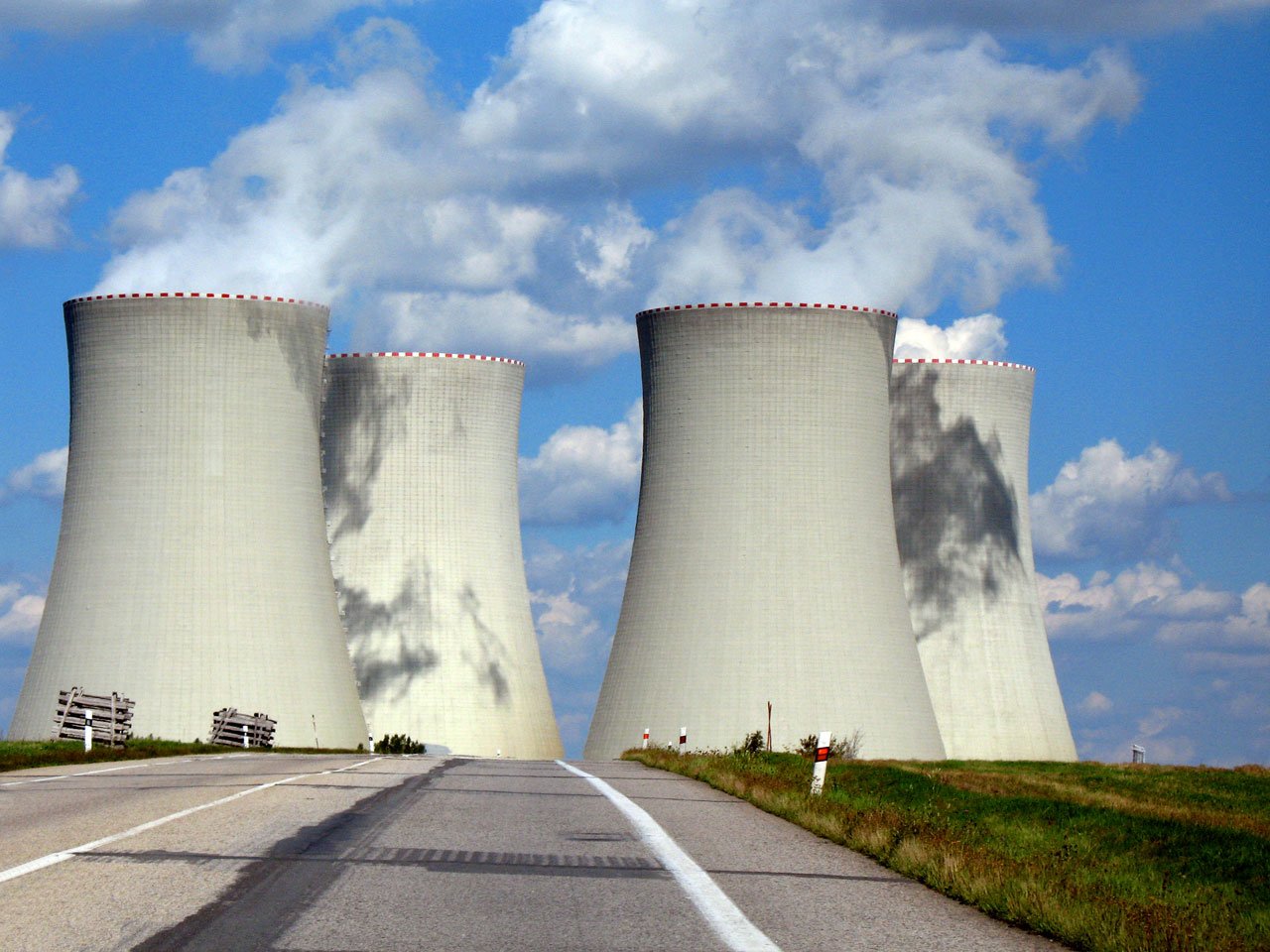 [caption id="attachment_10243" align="aligncenter" width="1280"] Those are your electric bills going up in ... steam. (You thought I was going to say "smoke," didn't you? See, I know things.)[/caption]
By Frank Andorka, Senior Correspondent
No matter how many utility executives say, "We don't have enough information to decide whether the President Trump nuke bailout is a good idea yet," the people who know stuff - you know, experts - have weighed in, and the news is not good. At the same time Exelon's CEO was telling a crowd at the Edison Electric Institute's annual meeting that no one had any idea whether Trump's plan to mandate that grid operators buy electricity from failing nuclear and coal plants was a good one yet, the Nuclear Information & Resource Service (NIRS) was saying that the planned federal handouts for nuclear alone could add up to $280 billion to electricity bills by 2030. That's $17 billion per year in unnecessary money being shelled out by ratepayers like you and me. It probably doesn't need to be said, but Exelon owns all or a portion of 16 nuclear plants throughout the United States. So maybe he's a bit ... what's the word ... biased in favor of a Trump nuke bailout. The NIRS also said in a release that:Forcing the purchase of overpriced and non-competitive nuclear and coal power also would crowd out renewables, leaving the U.S. farther behind in wind, solar and energy storage technology development and use.Because if there's anything the United States needs right now, it's to fall even further behind in new electricity-generation technology. Gotta keep those coal jobs alive somehow, I guess. Tim Judson, executive director, Nuclear Information & Resource Service (NIRS), said (emphasis ours):
By pushing for a nationwide bailout for nuclear power and coal, the Trump administration is rushing headlong into an energy buzz saw, and they don't even seem to know it. Subsidizing the nuclear industry alone is likely to cost American consumers $8 billion to $17 billion per year, and subsidies for coal could cost just as much. Betting on old, increasingly uneconomical nuclear and coal power plants as a national security strategy is like gold-plating a Studebaker and calling it a tank. And it could destroy the booming renewable energy industry, which is already employing more Americans than coal and nuclear combined.The words for this madness, they fail. More: Exelon CEO: ‘We Need Federal Intervention’ on Grid Resilience