

Jigar Shah Speaks On The Future Of U.S. Solar, And He’s Optimistic

By Frank Andorka, Senior Correspondent

What Happened: Jigar Shah talked with GreenBiz writer Lucy Kessler to discuss how taxes and tariffs are going to affect the future of the solar industry.

  • In the interview, he argues the “sky is falling” mentality the solar industry has surrounding President Trump’s ill-advised tariffs on imported modules is counterproductive and overblown.
  • He also believes that while the tax-code changes may slow tax-equity financing in solar temporarily, the dust will settle once everyone understands the details of the law.
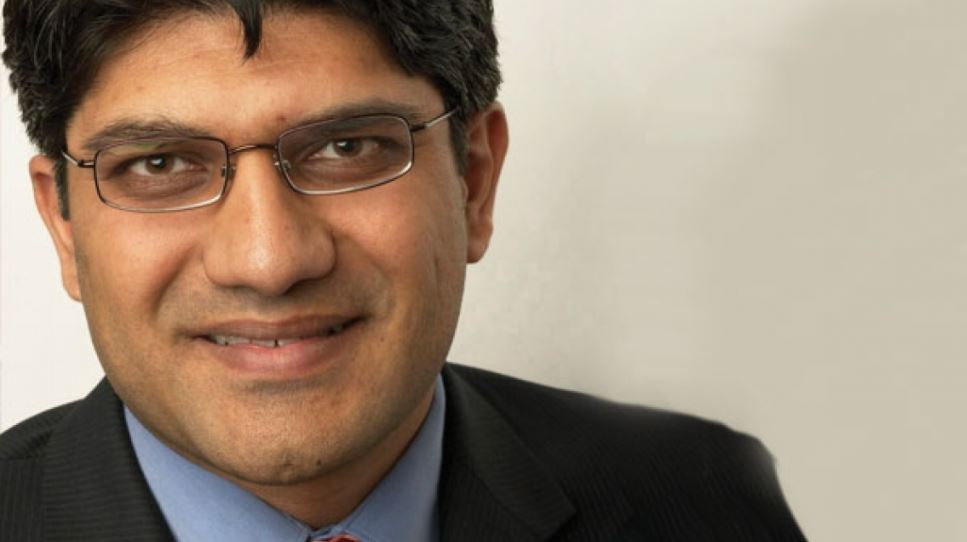
Jigar Shah

SolarWakeup’s View:  Ever since I joined the solar industry in 2011, the name Jigar Shah has been spoken in the hushed tones usually reserved for the Pope or, in certain circles, Bruce Springsteen – and with good reason.

Shah was one of the earliest investors to recognize the future of solar before it became the hip electricity source it is now, and he built an extraordinarily successful business in SunEdison (its collapse happened long after he had left). Now co-founder and president of Generate Capital, Shah is still one of the most sought-after opinion leaders in the solar industry, which is why GreenBiz did an interview with him on the subject of the solar tariffs, tax-law changes and state-level solar policy initiatives.

The whole interview is interesting because, as someone who has already seen some of the harshest cycles the solar industry has been through, Jigar Shah can stand back and look at the current policy upheaval with the unbiased eye of an outsider.

(And Jigar Shah is unflappable. I remember watching him get hounded one year at the Midwest Solar Expo by some snot-nosed reporter from an upstart solar publication about the first round of SolarWorld Americas trade actions, and he handled my incessant nagging with otherworldly grace and aplomb.)

But the point I found most fascinating, in part because it does feel like so few other people are talking about it, is where Jigar Shah talks about the future of solar manufacturing and says tariffs aren’t the right policy mechanism to restore it. Instead, he suggests the United States finally join the rest of the developed Western world and develop a national, integrated, coherent industrial policy.

I don’t know if he could hear me, but I stood up in Cleveland, Ohio, and cheered as loudly as if the Browns had won the Super Bowl.

Shah told Kessler:

I honestly think it’s more about the United States having an industrial policy. Does the United States actually want manufacturing in this country? If it does, it needs to support those companies, like they do in Canada and Germany.

We have to provide financial incentives such as loans or grants to get these companies to manufacture here, as other countries do. Tariffs are not going to support manufacturing in the United States. I think the opportunity is ripe, but only if the federal and state governments have proactive industrial policies.

It’s clear to any seasoned solar observer that the idea that tariffs will bring back solar manufacturing is idiotic. To my knowledge, only one company has decided for sure to build a new factory in the country, and its commitment has turned into the incredibly shrinking Jacksonville plant. There are rumors of others, but as of now they are just that – rumors. One company that tried to save itself with the tariffs is near to being sold off for parts, and despite loud promises, only whispers are coming out of the other’s headquarters now.

In the end, Shah’s forward-thinking idea is the way to bring solar manufacturing back to the United States. If only our leaders in Washington could hear and heed Shah’s “radical” advice (it’s only radical in this country).

More:

An optimistic Jigar Shah talks tariffs, taxes and state leaders in clean energy

[wds id=”3″]

Utility Monopolies Screw SC Solar After Sneaky Shift On Bill

By Frank Andorka, Senior Correspondent

What Happened: Damn, that was cold – although you have to admire solar’s opponents in South Carolina for employing an obscure legislative sleight of hand to kill a bill that would have eliminated residential net metering caps.

  • After the utilities raised all holy hell about how removing net metering caps would COMPLETELY DESTROY THEIR BUSINESS RIGHT NOW, the cowards in the South Carolina House of Representatives reclassified the bill as a tax increase, which mean it needed a 2/3 majority instead of a simple majority.
  • So…solar advocates in South Carolina can kiss the expected industry expansion goodbye, at least for now.

utility monopolies

SolarWakeup’s View:  Those of you who know me recognize me as one of the most cynical human beings in the world, especially when it comes to the Wild-West world of politics. But even my breath was taken away by how brazenly South Carolina’s utility monopoly stole a solar-expansion bill out from under the industry with an obscure legislative maneuver that twisted the bill’s purpose into something unrecognizable, even to its own sponsor.

Remember that article I wrote all the way back on Friday? About how the South Carolina House of Representatives had voted to lift residential solar net metering caps, a move destined to expand the state’s burgeoning solar industry and bring it more in line with its northern neighbor? Remember how I suggested that we not celebrate quite yet because it still had to pass the Senate before becoming law?

Little did I know the utility monopolies would buy their way back into the House to kill it there before it even had a chance to be debated in the upper house.

Through a legislative sleight of hand, the bill – which passed with a majority just last Friday – magically became a “tax increase” bill, which requires a vote of 2/3 of representatives instead of a majority. As a result, another vote was taken, and the bill failed to get to 2/3 by nine votes.

I mean…wow. Just. Wow.

The gobsmacking chicanery in South Carolina highlights a question that is central to whether solar will continue to thrive in this country: Will we continue to let state-supported utility monopolies continue to keep the United States from modernizing and updating our electric-generation system? Or will the people – who, as I wrote about yesterday, want a distributed-generation solar future – finally say, “Enough is enough.”?

It’s time to hold state representatives who decide to side with utility monopolies over their constituents accountable. Let’s vote the bastids out.

More:

South Carolina House kills pro-solar bill after last-minute rule change

The Latest: Solar Energy Bill Killed in Legislative Surprise

South Carolina Sends Solar Soaring With Cap Removal

[wds id=”3″]

C&I Snags $250 Million To Expand Sector Breadth

By Frank Andorka, Senior Correspondent

What Happened: Greentech Media reports that the commercial/industrial (C&I) sector now has $250 million in new money to purchase operational assets, thanks to the efforts of CleanCapital and CarVal Investors, the investment arm of industrial giant Cargill.

  • According to GTM, CleanCapital has purchased mroe than $100 million in distributed generation projects in the past several years. focusing entirely on the C&I sector.
  • The money will also allow CleanCapital to increase its focus on segments such as energy efficiency, storage and new construction solar.
C&I

Daughters of the American Revolution Hall
Photo courtesy of Standard Solar

SolarWakeup’s View:  OK, I must admit I was mildly confused by Greentech Media’s story on the joint-venture fund for the commercial segment, so indulge me a bit of insider baseball of the journalism sort.

The headline says the funds will be used to finance “C&I Solar,” but the body of the article doesn’t mention C&I solar at all in the body of the piece, which left me scratching my head. What I think is going on here is that the writer assumed solar when it was not in evidence, and that the funds will actually be used for a broader set of projects than the article implies.

Still, $250 million earmarked to fund energy efficiency, storage and new-build solar projects in the commercial segment is nothing to sneeze at, especially since (as the CEO of CleanCapital told GTM) the commercial segment has struggled to find money for such projects.

“I see a bulk of our capital going towards our continued growth in acquiring operating assets, while continuing our innovation this year to get to C&I projects with unrated offtakers,” President Jon Powers told SolarWakeup.

Powers also told SolarWakeup that it’s their vision to expand the C&I market beyond municipal and rated credits, something that can be challenging for traditional lending operations to understand.

I understand that inancing commercial solar is complicated, given the relative youth of the segment and the perceived instability associated with it. But the wariness of traditional lenders means that I agree with Powers: There is an untapped market in C&I waiting to be exploited if the money was there.

It’s always a good thing to see money coming into the C&I sector, given that it is the one segment of the solar industry that hasn’t had its boom yet. It’s time for C&I solar to have its day in the sun.

More:

CleanCapital and CarVal Investors Team Up on $250 Million C&I Solar Fund

[wds id=”3″]

What Would Consumers Choose? (Solar. They Would Choose Solar.)

By Frank Andorka, Senior Correspondent

What Happened: Sunrun has produced a consumer-friendly report called Affordable, Clean, Reliable Energy, which asks the ever important question: What would consumers choose for their own electrical production?

  • In a delightfully readable format, Sunrun’s CEO Lynn Jurich posits that given a choice between a distributed-generation, renewable-energy based electrical system and the traditional fossil-fuel based one, consumers would choose the former.
  • She also forcefully lays out the case for solar as a job generator and calls for an end to the “war on solar” (now there’s a woman who knows how to use catchy slogans).
  • Lastly, Jurich argues in favor of removing the state-sponsored monopoly status from most utilities and letting the market decide what the best future for the U.S. electrical grid is. (You go, Lynn!)

consumers

SolarWakeup’s View:  More of this, please.

Poll after poll after poll indicates that American consumers, by and large, prefer solar electricity. The most famous poll of all showed the number approaching 90%. So why have we failed so spectacularly to rally those throngs of solar-loving Americans behind policies that would help maintain and expand the industry beyond where it is now?

[wds id=”3″]

I have a theory, and it has to do with the technical nature of our industry.

It’s easy to get excited about efficiency ratios, inverter harmonics and other deeply technical issues, and they are interesting to most people within the industry. But most American consumers are like me – the engineering aspects of solar, while interesting, wouldn’t be enough to get me off my couch and to a pro-solar rally.

That’s why Sunrun CEO Lynn Jurich’s new 32-page advocacy piece, Affordable, Clean, Reliable Energy is such a refreshing change from the typical pro-solar article. Jurich’s clear, concise article hits on two of the most compelling arguments for why consumers should – and do – choose solar energy:

  • Solar is a job generator.
  • Solar allows consumers to seize control of their own electric future.

Jurich also issues a challenge to utilities who, in many cases, seem scared to compete against solar: Let the free market decide. Remove the state-sponsored monopoly status that most utilities enjoy across the country and give consumers the choice of what kind of electrical future they want. Would they want a decentralized/cleaner/cheaper electricity-generation system;; or rebuilt 19th century centralized/dirty/fossil based one. Jurich bets they would choose the former.

It’s a message that more solar companies must do a much better job of proclaiming every day – and I thank Jurich for at least giving it a good start.

More:

Sunrun - Consumer Centered Energy April 2018