
Back To The Future: New Jersey Starts Its Solar Return

By Frank Andorka, Senior Correspondent

What Happened: The New Jersey legislature yesterday passed two bills – one in the House and one in the Senate – designed to jumpstart the state’s solar industry by:

  • increasing the overall RPS to 50 percent by 2030
  • enabling a community solar program
  • shutting down its problematic sREC program
  • reducing the overall cost of the current solar Renewable Portfolio Standard (RPS) by lowering the Solar Alternative Compliance Payment.

Back To The Future

SolarWakeup’s View:  New Jersey has been quietly fuming as New York leapfrogged over it as a progressive state in the race for solar leadership. Well, yesterday, the Garden State told the world it was going back to the future and reclaiming the solar prominence it enjoyed under former Governor Jon Corzine.

[wds id=”3″]

It’s easy to forget now, but New Jersey once sat in the second spot of the Solar Energy Industries Association’s Top 10 Solar States annual report not that long ago. But under a chaotic solar renewable energy credit (sREC) program combined with an exceedingly modest renewable portfolio standard (RPS), it had fallen all the way to fifth. And when most recent Governor Chris Christie left office with an RPS increase bill tucked neatly in his back pocket, the solar industry sighed heavily and resigned itself to slowly sinking even further.

But take heart, New Jerseyans – Governor Phil Murphy is here, and the legislature is about to send him a combined bill that will not provide New Jersey the springboard it needs to vault back to the top of the solar states list and grab at least a few headlines from the … colorful and bombastic governor of New York, who has been promoting solar in the Empire State like it’s the last thing he’s going to do on Earth.

“We applaud the New Jersey legislature for its forward-looking decision in passing twin solar bills that will set the stage for the solar industry’s continued expansion,” said Jesse Grossman, CEO of Soltage. “Now it’s time for the state’s industry – Soltage included – to roll up our sleeves and get work in returning New Jersey to its proper place top tier solar states in the union.”

It’s time for New Jersey to hop into the Delorean and go back to the future under its new governor. Not only is it good for the state, it also shows states like my own beloved Ohio that cloudy and cold should not inhibit the growth of a solar industry. I look forward to seeing New Jersey’s comeback. It’s long overdue.

This article was edited at 1:44 pm ET to add comments from Jesse Grossman, CEO of Soltage.

More:

New Jersey Legislature Passes Bill Supporting State’s Solar Sector
New Jersey Solar Industry Receives Much-Needed Win

EVs Will Start School Later This Year

By Frank Andorka, Senior Correspondent

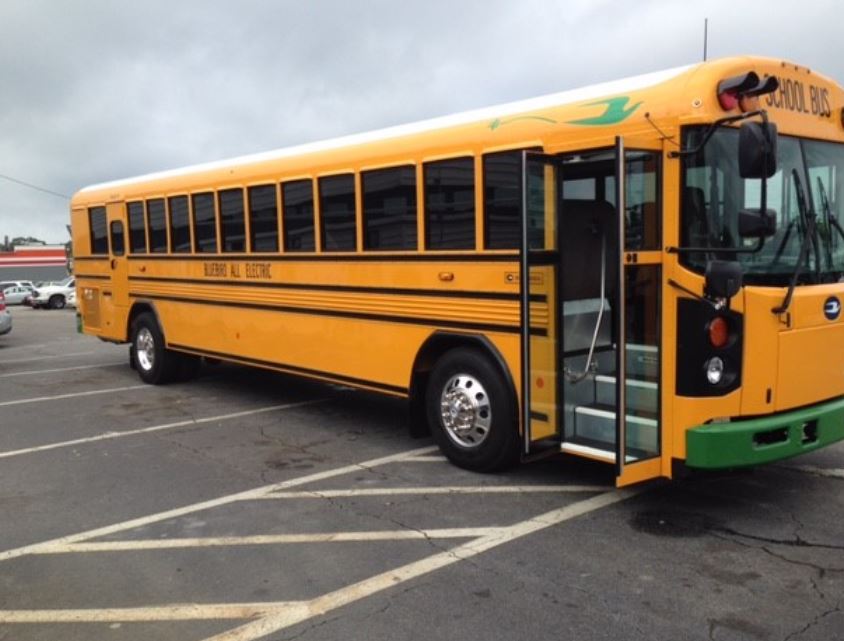
What Happened: Blue Bird Corporation, whose iconic logo you’ve probably seen on a school bus near you, is diving bravely into the future by unveiling the electric versions of its Type C & D configuration school buses.

  • According to CleanTechnica, Blue Bird is reportedly the only U.S. company offering electric buses in those configurations.
  • You could see these buses delivering your kids to school as soon as this fall.

EVs

SolarWakeup’s View:  Pretty soon, you may not hear the churning of diesel engines as school buses stop at the end of your driveway to pick up your precious baby for school – not if school-bus company Blue Bird has its way.

The company announced the unveiling the latest version of its plug-in EVs in all of their yellow glory, adhering to the usual school bus dimensions, minus the snub nose of old. Powered by 160 kWh battery packs allow the new buses to go 120 miles on one charge, which should be more than enough for most school bus routes with which I am familiar.

What makes these newest EVs so groundbreaking, however, goes beyond transporting children. Right now, EVs – particularly plug-in EVs – are still outside of most people’s daily experience, so it’s often hard for people to understand how important they are to the future of transportation in the United States.

[wds id=”3″]

But now that they’ll be transporting kids to school? EVERYONE will know what EVs are. And we all know that once parents discover how good they are for their children’s environment, they will demand all the school buses be electric. Once that happens, you know they will proliferate everywhere.

I’ve argued for several years that a move like this would be the final push EVs need to become entirely mainstream. That moment finally appears to be here.

More:

Blue Bird Now Taking Orders For Electric School Buses To Be Delivered In 2018 (CleanTechnica)

Americans Tell Gallup: Develop More Solar, Please

By Frank Andorka, Senior Correspondent

What Happened: Gallup’s annual Environment survey indicates that Americans want to develop more alternative energy sources instead of traditional fossil-fuel generation, to the tune of 73%. (Psst…Gallup….Lynn Jurich called and would like her conclusion back, please. Thank you.)

  • In contrast, only 25% of the country is worried about the availability or affordability of energy in this country.
  • And finally, more than half of Americans want to prioritize environmental conservation over fossil-fuel energy development (which may mean that, for now, the Arctic National Wildlife Reserve is safe from oil derricks).

Americans

SolarWakeup’s View:  All I keep hearing is how much Americans want to develop more solar energy. Poll after poll indicates that, including what I refer to as “the famous 90% poll” I’ve been hearing about since I joined the industry in 2011. Lynn Jurich of Sunrun posited as much in her latest thought-leadership piece.

The latest Gallup Environment survey is no exception.

According to the poll’s findings, 73% of Americans want the United States to wean itself of traditional fossil fuels and pour more research into alternative energy sources like solar and wind. And more than 50% prefer to protect the environment over more fossil fuel exploration.

So why does solar still find itself fighting an uphill battle in state after state to get itself established (in South Carolina, for example, where they were SO close to expandinig the industry but decided to kill it instead – sorry, my jaw is still dropped on that one)?

The answer is pretty easy, of course, and you know it deep in your soul – the coal, oil and gas industries are deeply entrenched in the political and utility infrastructure, and those interests are fighting a savage rearguard action to maintain their own power.

[wds id=”3″]

But it’s a fight they will lose. The American people keep speaking, loudly, against their monopoly. Eventually, those voices will drown out the shrieking death throes of fossil fuel interests.

In the meantime, however, solar can’t just sit back and wait for this to happen. Americans have the attention spans of drunken gnats, so it’s incumbent on us to keep fighting to get the word out about the benefits of solar energy – as a job creator, as an environmental safeguard and as a national-security bulwark. I’ve always said that if we could activate the general public, solar would win this battle easily.

So let’s do it already – there are groups out there with whom an alliance to make this happen just makes sense. Make it happen in your community, and I’ll do what I can to make it happen in mine.

Deal?

More:

U.S. Energy Concerns Low; Increasing Supply Not a Priority (Gallup)

What Would Consumers Choose? (Solar. They Would Choose Solar.) (SolarWakeup, courtesy of Sunrun)

Solar United Neighbors

The Energy Show – What are Microgrids?

The Energy Show, a podcast by Barry Cinnamon is now available on SolarWakeup

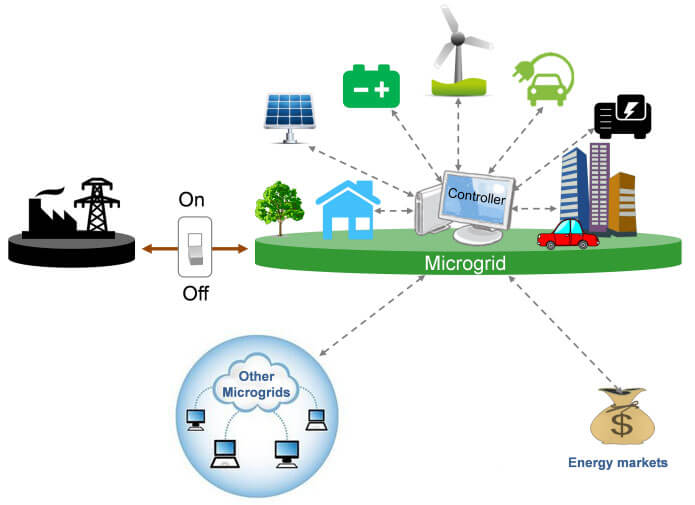
We call our power system an electric “grid” because it is composed of a network of wires that move the power around from node to node – basically a combination of power sources (natural gas power plants, solar farms, nukes), wires (long distance transmission lines and local distribution utility poles) and controls. Microgrids are the same concept but on a much smaller scale.

One example of a microgrid is a complex of buildings on an island. The power plant on an island has historically been a diesel generator, which feeds power to buildings through a smaller network of relatively low voltage wires. More recently these island microgrids have an array of solar panels and batteries providing most of the power, with a backup diesel generator for extreme weather conditions.

New commercial and residential PV and battery storage systems function essentially the same way. These much smaller microgrids provide inexpensive solar power, maximize savings with batteries for when power is expensive, and function in backup power mode if the utility goes down.

The microgrid concept is becoming more popular due to the realization that multiple, linked smaller power grids are more reliable and less expensive than larger centralized grids. Note that microgrids do not carry the high management and investor overhead that utility grids require. These microgrids can also be deployed much more rapidly and take advantage of the latest technology.

Listen up to this week’s Energy Show to learn more about microgrids, and the importance they are playing in the changing landscape of central and distributed energy.

More: