
FMPA Fails To Get Lowest Rates With Byzantine Bidding Process

By Frank Andorka, Senior Correspondent

What Happened: The Florida Municipal Power Agency (FMPA) recently completed a bid on a 223.5 MW project for its member municipal utilities that sources tell SolarWakeup did not arrive at the lowest possible price.

  • Published reports peg the price at less than 4 cents per kWh, and sources familiar with the bidding process say there was at least one bid that came in lower.
  • The decision came at the end of what can at least be called an odd, byzantine bidding process where a closed set of companies were chosen to submit bids.
  • FPMA

    Interestingly, Miami-based developers with solar experience in Florida were not chosen to bid on the FMPA project.

    SolarWakeup’s View:  When you join a buying cooperative, you should get the lowest price on whatever you’re buying, right? Otherwise, what’s the point in joining forces to make purchases?

    So what to do with the Florida Municipal Power Agency (FMPA), a collaboration of 12 municipal electrical agencies that recently awarded a 223.5 MW project group to NextEra Energy in the form of three 74.5-megawatt sites? A closed group of seven companies (listed below) bid on the project, and the price came in at less than 4 cents per kilowatt-hour. But at least one source close to the project said their bid had come in lower – so should the municipal utilities that make up the FPMA be upset?

    The answer is a definite maybe.

    [wds id=”3″]

    FPMA reports they called and requested bids from the following seven companies:

  • NextEra
  • Duke Energy Florida (DEF) (unregulated solar affiliate)
  • Tampa Electric Company (TECO) (unregulated solar affiliate)
  • GroSolar (Global Resource Options, Inc.) an EDF Renewable Energy Company
  • Invenergy Solar Development North America (Invenergy)
  • Eagle Solar Group, LLC in conjunction with Holloway Solar Farm LLC
  • Soltage, LLC in conjunction with ESA Renewables
  • FMPA says it negotiated with the top two bidders Invenergy and NextEra, and NextEra won the bid.

    Except….that’s not the story we are hearing. And we also find it curious that Origis, which has done multiple large-scale solar projects of almost exactly this size, was not included, nor was sPower, whose former majority shareholder was based in Miami.

    In short, the odd way the bidding occurred, combined with the reports that it wasn’t the lowest price, should inspire FMPA members to at least ask questions. It sure seems like a strange use of the co-op power to us.

    More:

    Orlando, Winter Park, other cities plug solar project as one of nation’s biggest
    Two VOS Studies Vary Widely: Can You Spot The Major Difference?

    By Frank Andorka, Senior Correspondent

    What Happened:Utility Dive has an excellent piece describing the 88% difference in two VOS studies, one in Montana and one in Maryland.

  • The Maryland VOS study, prepared by the state’s Public Service Commission, values solar highly. The Montana VOS study, prepared by the state’s largest utility, values solar less highly. Can anyone spot the difference?
  • While the Utility Dive analysis goes far deeper into the specifics, it’s no surprise that these reports turned out the way they did.
  • VOS

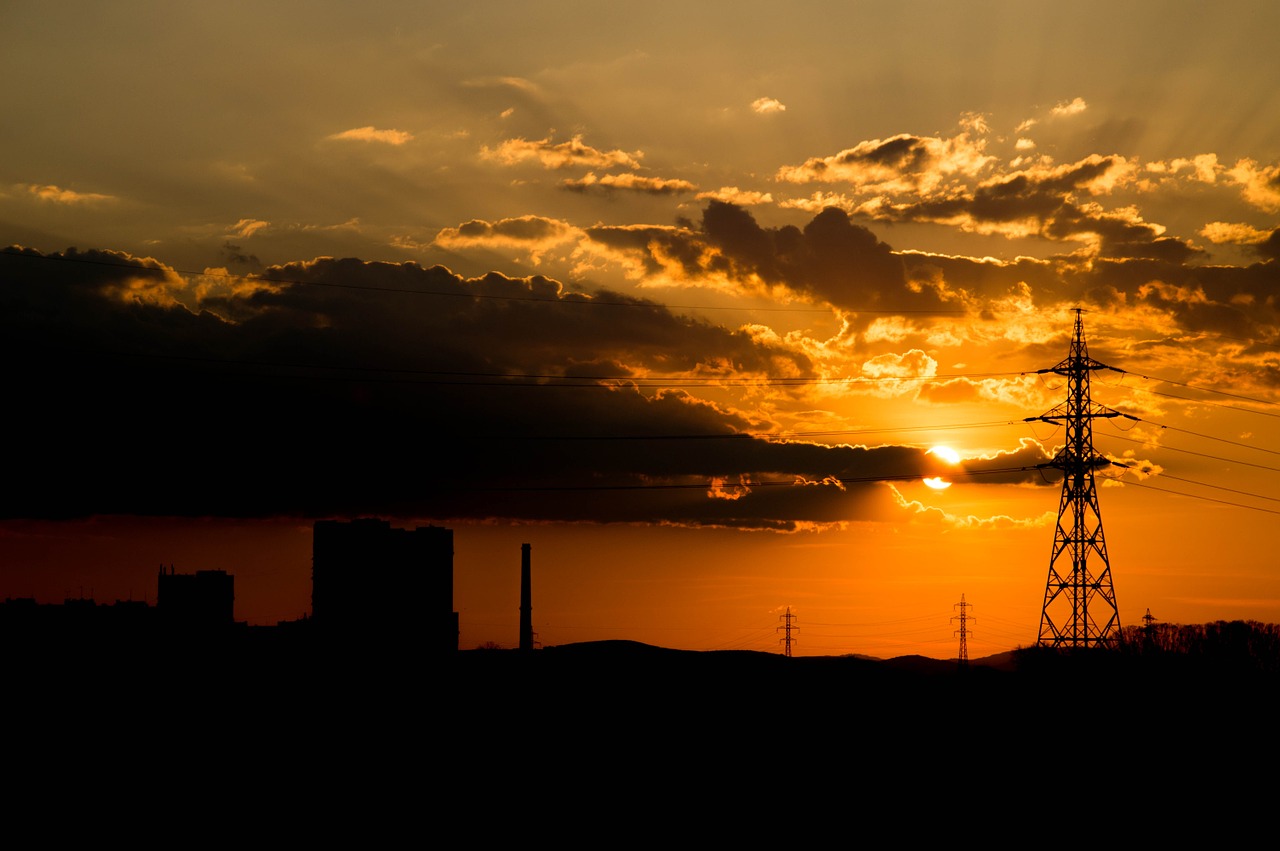
    Is the image of the sun setting on a utility pole too heavy handed? I worry it’s a little heavy handed.

    SolarWakeup’s View:  Let’s get this out of the way first: Go read the Utility Dive explanation of two value-of-solar studies – one in Montana, the other in Maryland – which come to two deeply different conclusions about how solar should be valued when it comes to net metering and other compensation structures. It is excellent, and it is detailed. I could not do a better job myself.

    But I want to look at one factor that UD slides over that may be the single-biggest determining factor in why, according to the two studies, solar is 88% more valuable in Maryland than in Montana. That factor is who paid for the study.

    [wds id=”3″]

    In Maryland, the study was prepared by the state’s Public Service Commission, a supposedly independent body whose job it is to balance the needs of ratepayers and utilities to come to an equitable balance between those two seemingly divergent interests. As such, it has no particular agenda to push; it can afford to look at as many facts as possible – and take as many stakeholder views into account as possible – before rendering its decision.

    Montana’s study, on the other hand, was paid for by the state’s largest utility, in whose interest it is to value solar less highly because of its own vested interest in keeping solar penetration limited. After all, the more solar penetration there is, the fewer people are dependent on the utility to supply electricity. That means a smaller customer base, which means fewer profits, which means unhappy investors. When there’s a study being done by one of the party’s involved in a dispute, it can’t surprise anyone when the study comes out in that party’s favor.

    I don’t mean to imply either study is perfect, nor am I suggesting that who paid for the study was the sole factor in outcome. But I am suggesting it plays a significant role – and is something activists on the solar side should account for whenever one of these VOS studies comes out against us.

    More:

    How two value-of-solar studies add up to no clear value of solar (Utility Dive)

    Zombie Lie Moves Into The Tennessee Valley, Results In Unnecessary Fee

    By Frank Andorka, Senior Correspondent

    What Happened:The Tennessee Valley Authority (TVA), in an action that seems antithetical to its entire mission, imposed a grid-access fee on its customers, aimed specifically at solar users because of the zombie lie of the cost-shift.

  • For a utility whose whole existence is owed to the idea that poor, rural people deserve low-cost electricity, the TVA’s grid-access fee seems to be the height of hypocrisy.
  • The TVA servers around 9 million people across seven states.
  • zombie lie

    The TVA USED to be about electricity for all. Now it’s about “electricity, but we’re going to charge you a random grid-access fee for it.”

    SolarWakeup’s View:  This flippin’ zombie lie is back again, this week popping its head up from the depths of hell in the Tennessee Valley.

    The Tennessee Valley Authority (TVA), for those who don’t know, was established as part of President Franklin Roosevelt’s New Deal program, in part to bring electricity to rural areas of seven states. These areas weren’t served before because it was considered too expensive for traditional utilities to string wires to many of these areas off the beaten path.

    It revolutionized the United States and gave rise the New South. But now, the TVA is relying on the zombie lie of the “cost shift” to penalize anyone on their grid that wants to install solar with a usurious “grid-access fee.”

    [wds id=”3″]

    TVA President Bill Johnson gave away the game when he started talking about how “more able” people are able to afford self-generation technologies like solar. As the Chattanooga Times Free Press quotes Johnson:

    “Some consumers, particularly the more able ones, can invest some solar panels or other resources, but they still rely on the valley-wide transmission system for backup power,” Johnson said. “The result is how we bill for electricity can be out of sync with the actual costs of getting electricity to some consumers.”

    How many times do we have to kill this damn lie about how solar consumers supposedly “shift” costs on to non-solar users? (Forever, Frank, you idiot – that’s the whole point of zombies…..)

    The argument goes like this: Retail-rate net metering, a program under which solar customers are reimbursed for the excess electricity they produce, pushes extra costs on to non-solar customers because solar customers aren’t paying for grid upkeep.

    What the utilities don’t want you to notice, of course, is that solar customers also relieve congestion on the grid during peak production times, which saves strain on the transmission and distribution lines. So while they may not be paying for upkeep directly, solar production saves wear and tear, which ultimately saves the utility money in the form of repair costs.

    You’re welcome.

    I should note here that while there is a minor cost-shift, a study by the Lawrence Berkeley National Laboratory indicates the shift only happens when a state passes the 10% mark for solar-electricity generation. And I should also note that even at more than 10%, the shift is so small you’d need the Berkeley Lab’s $27 million electron microscope to see it.

    As it always is, this maneuver is nothing more than a power and money grab by a rapacious utility – and it looks like the zombie lie going to succeed (again) in eating into the savings solar consumers should have from installing their systems.

    More:

    TVA adopting grid access fee in move to impose more fixed costs on power bills

    Can the Battery Storage Industry Avoid The Same Mistakes As The Solar Industry?

    Battery storage is roughly where the solar industry was in the early 2000s. It’s a tiny market now but it is exploding and the technology is evolving rapidly. There is money saving potential for customers but there are risks for incumbent energy providers who are pushing back.

    The standards are changing like quicksand and investor funds are pouring in to take advantage of this inevitable market. The rapid “hockey stick” growth that we are seeing in the energy storage industry is likely to be even more accelerated than the growth of the solar industry.

    [wds id=”3″]

    All the pieces are in place for a number of successful companies throughout the value chain, but as with the solar industry, there is going to be some spectacular train wrecks along the way as well as some companies that just do not have the staying power to succeed.

    On this week’s Energy Show, we talk about the following eight mistakes that companies in the solar industry made that hopefully storage companies can avoid:

    Mistake #1: Constraints on critical upstream components (Li or Co = Si?)
    Mistake #2: Live by incentives and die by incentives
    Mistake #3: Releasing half-baked products
    Mistake #4: Ignoring software
    Mistake #5: Assuming electricity rates will always go up
    Mistake #6: Not paying enough attention to safety issues
    Mistake #7: Selling commodity components, not bankable systems
    Mistake #8: Inevitable black swan events