

This is your SolarWakeup for September 5th, 2018
Reminder. Make sure to add @solarwakeup.com to your safe email list. Every now and then the email gets flagged due to the amount of emails that flow every month (it’s gotten much bigger than the original 37 recipients). If you haven’t received the email then make sure to check the safe list! While you’re at it, make sure to get your colleagues to take the leap and subscribe!
Memo To Utilities. Time to move past the net metering is a subsidy argument. Especially when reports show the value of distributed generation during congestion and high demand times. The argument should revolve around the impact that solar has on shareholder investment opportunities and the future of the grid when solar plus storage bring a ton of demand response value to the operations. All is not lost, focus the future on electric vehicles and the ability to manage the grid as a lines company.
Introducing Clearway. When NRG decided to sell NRG Renewables, which I think in retrospect is something that the NRG CEO will regret in the long run, I expected more of a household name to come after the assets. It appears now that GIP was looking at a platform to deploy capital, likely a virtually unlimited amount of LP money. GIP closed the transaction and created Clearway, quickly adding a massive SunPower portfolio to its assets. Make sure to familiarize yourself with the name.
Ohio’s Solar Potential. Ohio was on the way to being a great midwest solar market well before Illinois ever tried. But the politics of America’s swing state took the market into the gutter but it could have been great. Now a report by Repowering Ohio shows the potential for 2.2GW of renewables for Ohio and so many local jobs. It’s a great political strategy in my opinion for folks to show that renewables can work for everyone, whether you work on a roof, a factory or in an office tower.
Inside The Deals. We need more corporations to talk publicly about how they did their renewables procurement. Large companies have the internal expertise and time to figure it out, what the market really needs is large scale procurement by small and mid-sized companies that have to copy the format of those large entities. So enjoy this inside the deal article about Mars PPAs.
New Jersey Solar. Join me on November 6th and get your ticket now please! I’d appreciate the support. If you have topic recommendations, now is the time as the invitations are going out, these are 1 on 1 interviews where the audience actually gets to dig into a topic. Abby Hopper, SEIA’s CEO, will be joining us at SolarWakeup Live! Jersey City as the first announced speaker.
News
Opinions:
Have a great day!
Yann
Utilities Are Catching On To The Energy Storage Revolution (At Least If Growth Is An Indication)
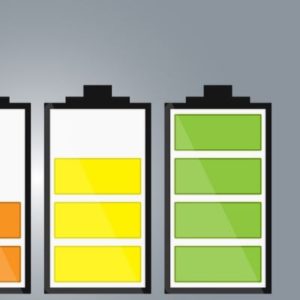
By Frank Andorka, Senior Correspondent It’s easy to lose sight in today’s electricity market that energy storage isn’t only happening on an individual homeowner level. In fact, a recent study showed that utilities increased their battery storage capacity 68% to 1.3 GWh in 2017. That number comes from a utility survey conducted by the Smart Electric Power Alliance, an utility-focused trade organization. The survey itself is behind a paywall, but pv magazine has the goods. For example: [wds id=”3″] The use of longer-duration batteries, able to discharge for several hours, has enabled balancing of solar with widespread storage, as in … Read More
Proposed Kansas Demand Fees Could Bring Solar Installations To A Screeching Halt

By Frank Andorka, Senior Correspondent Solar observers in Kansas are watching closely as two demand-charge proposals wend their way through the Kansas Corporation Commission. A decision on whether the fees will go into effect is expected on September 27. It’s always interesting to watch lesser solar states work out their solar policies, despite the fact they often fall into some of the same traps earlier states have. Kansas appears to be no exception. The state’s two largest utilities – Westar Energy and Kansas City Power & Light – currently have proposals before commission, which solar advocates say could bring the … Read More
This is your SolarWakeup for September 4th, 2018
Welcome Back. Big news recap from this Labor Day Weekend. SolarWakeup Live! Jersey City is now live, we’ve got some great conversations on tap and as always a big focus on dealmaking. NJ has a bold solar agenda ahead and this is where you will want to be on November 6th. Get your tickets at solarwakeuplive.com as well as information on sponsorships.
Europe Moves Forward. The European version of the solar tariff was in the form of a minimum price. After several years of the counterintuitive tax, the EU is pulling the MIP. The UK took a brunt of the tax as it was the market that was the hottest during the time, but now many of the markets will be able to tackle unsubsidized solar within the global market dynamics.
Moniz Issues Approval. Since the CA Legislature sent SB100 to the Governor, much has been said about the pros and cons of the bill that would have California at zero carbon for 100% of its energy consumptions. The Governor has yet to sign the legislature but is widely to do so ahead of the Global Climate Action Summit happening in San Francisco. The former Secretary of Energy has chimed in, telling Axios’ Amy Harder that this is a ‘very big deal’.
Consumers Pay For Fire Damage. There was some sentiment that the California fires would cause the utilities to use shareholder money to pay for the damages, potentially causing a bankruptcy of an IOU. Given the system that we are in, where regulated monopolies have to take very little risk, I am not surprised that consumers will have to pay the tab. Whether it is fires in California or hurricanes in Florida, the regulated monopoly model is outdated and no longer works for consumers in my opinion. The shareholders and consumers need to be aligned in benefits of new investments and aligned with the regulations that both parties have to operate under.
Ain’t First, You’re Last. Many co-operative utilities (co-ops) are part of larger generating entities. This gives them some bulk buying power which was essential in larger power plant operations. Some of the entities have places caps on the co-ops regarding how much solar they could contract with individually which has angered many co-op boards that are run by the ratepayers. Some co-ops are now leaving the larger entities and finding their energy in the open market with a lot of renewable energy attached to it.
Thank Your Neighbor. If they have solar on their roofs, they save you a lot of money. This latest report shows how much solar saved the system within ISO-NE during a recent heat wave.
News
Opinions:
Have a great day!
Yann
Paying A Price: Wholesalers Face Defections If They Move Too Slowly On Renewables

By Frank Andorka, Senior Correspondent One Colorado co-op has set the stage to defect from one wholesaler because they don’t believe it’s moving fast enough to incorporate renewables into its portfolio – and the long-term implications are potentially startling. As Western Energy News reports: The Delta-Montrose Electric Association will vote in October on rule changes that would allow another power supplier to help finance its exit from a contract with Tri-State Generation and Transmission. The association is among Tri-State’s largest customers, and its defection could heighten the risk of a mass exodus as others are forced to cover a larger … Read More
European Union Removes Trade Sanctions On Chinese Solar Modules

By Frank Andorka, Senior Correspondent While the United States seems hellbent on starting new trade wars with countries around the world, the European Union (EU) has determined that its own sanctions on Chinese solar modules should come to an end, according to reporting by Reuters. As Reuters reports: The EU first imposed anti-dumping and anti-subsidy measures for Chinese solar panels, wafers and cells in 2013 and extended them by 18 months in March 2017, signaling that they should then end. Chinese manufacturers have been allowed to sell solar products in Europe free of duties if they do so at or … Read More
This is your SolarWakeup for August 31st, 2018
Be Heard On SolarWakeup Live. Now that I am fully installed in the hub of solar, the SolarWakeup Live studio is also in operation. After a short summer break, come back to check out the podcasts from this platform which cover that most interesting people in solar doing the most important work. Being on SolarWakeup Live means sitting on the orange chair and introducing your point of view on the most influential newsletter in solar. If you have a story to tell and want to join me in person, send your pitch the next time you are in the Bay Area.
SB700 Heads To Governor Brown. The Senate has approved SB700 in concurrence and it has made its way to Governor Brown. Further info on the Assembly vote, it passed 57-18 in a giant bipartisan victory. Lastly, the delay in the bill vote I mentioned yesterday was due to a floor speech being left behind and needed to be brought to the Assemblymember.
Lion Point Offers To Take CSIQ Private. Lion Point was part of the Suniva process when they tried to get into the debt stack during the original bankruptcy. The reason was likely due to the investment that Lion Point had in Canadian Solar. Now Lion Point sees the potential for more upside with Canadian Solar as a private company and has offered to take it private for $250million. That’s what some folks would consider, funding secured.
More Debt For Cheaper Cost. The team at kWh Analytics has been doing nice work over the past 5 years to get to this point. The work has been to figure out what makes better solar installations and creates less risk for capital providers. Once that information has been credibly gathered, asset owners can engage with kWh to put an insurance product on their debt placement and significantly increase the amount of debt that it can put on the project cash flows. In the latest round, kWh insured cash flows for a portfolio of 50MW in Oregon. I also had to pleasure to hosting the kWh team at the Quick Mount manufacturing facility for a tour last week, this type of connection making is the reason I moved to San Francisco so we could all be a lot closer together.
News
Opinions:
Have a great day!
Yann
The Energy Show: Recycling Solar Panels with Sam Vanderhoof
[

The Energy Show: By Barry Cinnamon Solar panels last 30 years or more. Almost all of the old panels that I have tested still crank out close to their original power output. Unfortunately, old solar panels are not compatible with the electronics of new systems – inverters, optimizers and microinverters. Sort of like that old CD-ROM software that is still good…if you could just get a computer that has a CD-ROM drive and runs Windows XP. Some people want to upgrade their old 14% efficiency panels with new 20%+ efficiency panels equipped with a battery storage system. One big benefit … Read More
Canadian Solar Gets Offer For Privatization From Lions Point

By Frank Andorka, Senior Correspondent pv magazine reports that Canadian Solar might be ready to go private, thanks to a $250 million bid from venture capital firm Lions Point. If that latter name sounds familiar, it’s because it should be: SolarWakeup brought you the news earlier this year that Lions Point found itself embroiled in the Suniva bankruptcy, as fellow Suniva creditor SQN Financial accused it of trying to sell off parts of Suniva to eliminate the competition. What competition, you ask? Right. They were arguing that though Suniva had not produced a module in more than a year, Canadian … Read More
This is your SolarWakeup for August 30th, 2018
Two Days. Two Victories. Hot off the win on SB100, California keeps it coming with SB700 passing the Assembly. SB700 is a bill to extend the SGIP, the storage incentive, by 5 more years. This is an enormously important policy that allows storage to grow in the largest solar market and help consumers get solar with storage to offset the value they lost in the new time of use rate schedules. This isn’t just a victory for California however because when this market drives volume to residential and behind the meter storage locally, that means lower costs for everyone. This is part of the reason that even if you’re not doing business in California, you should consider joining CALSSA as a way of saying thank you. SB700 will head to the Senate for a concurrence vote before going to the Governor, no obstacles should come up however.
Policy Wins Take Hard Work. I was sitting in front of a computer when the votes were cast in favor of SB700 but behind the scenes, at the State, Capitol Bernadette Del Chiaro and her team at CALSSA were running around and whipping votes. They say you never want to watch sausage and laws being made and this was no different but we can recognize the work. About 15 minutes before the Assembly voted on SB700, the bill was skipped in the regular floor schedule. Most people in solar won’t ever know that and almost nobody knows, myself included, what happened in those 15 minutes. Two weeks ago 200+ solar professionals went to Sacramento to lobby for this bill and in the last year, hundreds of companies joined CALSSA to allow the lobbying to happen. My point is that none of this comes by accident or for free. If we want to succeed in this regulated business, we have to participate with our time and money.
What’s Next? There is another solar related bill on deck, AB893, which looks to increase the amount of renewable energy that California utilities have to source from developers. I’ll dig into that tomorrow to give you more insight on where that will go from here. I hope that this California edition gives hope to other States to follow suit. Governors Cuomo and Murphy should get the fear of missing out and urge their legislatures to make bold statements and grow solar in dramatic fashion.
News
Opinions:
Have a great day!
Yann