

3 Ways Permitting Creates Opportunity
By Yann Brandt, Managing Editor of SolarWakeup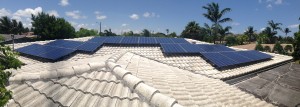 California made some headlines with Assembly Bill 2188. The bill made it through the State Assembly generally easily with a 58-8 vote after two unanimous votes in committee. The bill would help residential solar installations get their permit more efficiently or at least in a more pre-determined process. Permits would have to be issued within 5 days and probably more importantly the system would only be inspected after installation.
Having recently installed solar on my home, I can speak from experience that putting a 5kW on a home is not simple. Between the back and forth from the engineers and various Town departments, it took over 3 months from initial submittal to receipt of the permit. The mess of residential solar permitting processes creates enormous opportunity for various solar players; if only on the basis that several hundred thousand systems have already installed. Before long, we will have more than a million homes with solar, and reducing the time and cost associated with permitting will enable some to take financial advantage of this hurdle.
In California, installers currently work in around 500 municipalities with nearly none of them following the same process. The effort of AB 2188 along with SunShot efforts such as Go Solar in Broward County, Florida can create the uniform requirements that solar is looking for.
Assuming things clear up, let’s review three ways that solar companies could take advantage of the new rules.
App based solar permitting embedded in Sales
Some startups have already begun working on the concept. Sign up a customer and before leaving stand in front of the home and take some pictures on your iPad. The app, with the help of Google Earth aerial imagery, estimates a system size that the sales person can verify on site based on energy usage. Through the software’s locational awareness, the permitting guidelines are taken into account and a system design is created based on your product choices.
It seems a bit farfetched but realizable in short order with the simple creation of permitting guidelines that create scale in developing the software. Nobody is going to develop the app for 500 markets in California, but for an entire State it could be in our foreseeable future. Imagine the possibility of closing a sale and building a permit package before leaving the site on the first visit; scalable efficiency generated by smart regulations.
Welcome the era of micro-inverters?
A few years ago, residential providers actually allowed homeowners to select an installation date for their project on the website. Of course, prior to the actual installation, an installer had to visit the site and measure the roof. Google Earth, Pictometry and other are pretty accurate but nothing will replace the hand measurement of a home. Pipes, shading and other potential hazards are always missing from the imagery.
With micro-inverters, the permitting is in many ways agnostic to a few panels more or less. An installation crew simply comes to the site and understands the technical parameters that need to occur for the financial model to work. Trucks will come prepared with extra materials and a few more panels than the job calls for, no need to come back a second time or change out the inverter in the permitted designs.
This isn’t farfetched; during my installation I was not sure if the southern faces would end up working for all 20 panels due to the location of the exhaust pipes from the bathroom and kitchen. By using micro-inverters, I was able to plan for either scenario from the start and notified the building department ahead of the time that some panels had a potential secondary location.
More solar everywhere
Take away the significant cost of permitting, and you probably shave $0.30-$0.40/watt off the installation. By making it more efficient thus reducing the site visits and engineering costs, it may be possible to remove a large portion of the soft cost.
Removing costs, lowers the cost of solar for the consumer and in turn opens more markets. At $0.115/kWh in Florida, residential solar is very close to making financial sense for solar loans and solar leases. With improved permitting processes and installation efficiencies, these markets become immediately viable. By the time that President Obama gives his last State of the Union, we could hear solar is being installed every minute.
In a utopian vision, residential solar installations will have no technical site visits for installation or permitting. The only company representative that ever comes to the site is the sales person with some software. It all starts with Government taking away the significant barriers that have no effect on safety; it just creates uniform standards based on the local building codes.
California made some headlines with Assembly Bill 2188. The bill made it through the State Assembly generally easily with a 58-8 vote after two unanimous votes in committee. The bill would help residential solar installations get their permit more efficiently or at least in a more pre-determined process. Permits would have to be issued within 5 days and probably more importantly the system would only be inspected after installation.
Having recently installed solar on my home, I can speak from experience that putting a 5kW on a home is not simple. Between the back and forth from the engineers and various Town departments, it took over 3 months from initial submittal to receipt of the permit. The mess of residential solar permitting processes creates enormous opportunity for various solar players; if only on the basis that several hundred thousand systems have already installed. Before long, we will have more than a million homes with solar, and reducing the time and cost associated with permitting will enable some to take financial advantage of this hurdle.
In California, installers currently work in around 500 municipalities with nearly none of them following the same process. The effort of AB 2188 along with SunShot efforts such as Go Solar in Broward County, Florida can create the uniform requirements that solar is looking for.
Assuming things clear up, let’s review three ways that solar companies could take advantage of the new rules.
App based solar permitting embedded in Sales
Some startups have already begun working on the concept. Sign up a customer and before leaving stand in front of the home and take some pictures on your iPad. The app, with the help of Google Earth aerial imagery, estimates a system size that the sales person can verify on site based on energy usage. Through the software’s locational awareness, the permitting guidelines are taken into account and a system design is created based on your product choices.
It seems a bit farfetched but realizable in short order with the simple creation of permitting guidelines that create scale in developing the software. Nobody is going to develop the app for 500 markets in California, but for an entire State it could be in our foreseeable future. Imagine the possibility of closing a sale and building a permit package before leaving the site on the first visit; scalable efficiency generated by smart regulations.
Welcome the era of micro-inverters?
A few years ago, residential providers actually allowed homeowners to select an installation date for their project on the website. Of course, prior to the actual installation, an installer had to visit the site and measure the roof. Google Earth, Pictometry and other are pretty accurate but nothing will replace the hand measurement of a home. Pipes, shading and other potential hazards are always missing from the imagery.
With micro-inverters, the permitting is in many ways agnostic to a few panels more or less. An installation crew simply comes to the site and understands the technical parameters that need to occur for the financial model to work. Trucks will come prepared with extra materials and a few more panels than the job calls for, no need to come back a second time or change out the inverter in the permitted designs.
This isn’t farfetched; during my installation I was not sure if the southern faces would end up working for all 20 panels due to the location of the exhaust pipes from the bathroom and kitchen. By using micro-inverters, I was able to plan for either scenario from the start and notified the building department ahead of the time that some panels had a potential secondary location.
More solar everywhere
Take away the significant cost of permitting, and you probably shave $0.30-$0.40/watt off the installation. By making it more efficient thus reducing the site visits and engineering costs, it may be possible to remove a large portion of the soft cost.
Removing costs, lowers the cost of solar for the consumer and in turn opens more markets. At $0.115/kWh in Florida, residential solar is very close to making financial sense for solar loans and solar leases. With improved permitting processes and installation efficiencies, these markets become immediately viable. By the time that President Obama gives his last State of the Union, we could hear solar is being installed every minute.
In a utopian vision, residential solar installations will have no technical site visits for installation or permitting. The only company representative that ever comes to the site is the sales person with some software. It all starts with Government taking away the significant barriers that have no effect on safety; it just creates uniform standards based on the local building codes.
3 Ways Permitting Creates Opportunity
By Yann Brandt, Managing Editor of SolarWakeupCalifornia made some headlines with Assembly Bill 2188. The bill made it through the State Assembly generally easily with a 58-8 vote after two unanimous votes in committee. The bill would help residential solar installations get their permit more efficiently or at least in a more pre-determined process. Permits would have to be issued within 5 days and probably more importantly the system would only be inspected after installation.
Having recently installed solar on my home, I can speak from experience that putting a 5kW on a home is not simple. Between the back and forth from the engineers and various Town departments, it took over 3 months from initial submittal to receipt of the permit. The mess of residential solar permitting processes creates enormous opportunity for various solar players; if only on the basis that several hundred thousand systems have already installed. Before long, we will have more than a million homes with solar, and reducing the time and cost associated with permitting will enable some to take financial advantage of this hurdle.
In California, installers currently work in around 500 municipalities with nearly none of them following the same process. The effort of AB 2188 along with SunShot efforts such as Go Solar in Broward County, Florida can create the uniform requirements that solar is looking for.
Assuming things clear up, let’s review three ways that solar companies could take advantage of the new rules.
App based solar permitting embedded in Sales
Some startups have already begun working on the concept. Sign up a customer and before leaving stand in front of the home and take some pictures on your iPad. The app, with the help of Google Earth aerial imagery, estimates a system size that the sales person can verify on site based on energy usage. Through the software’s locational awareness, the permitting guidelines are taken into account and a system design is created based on your product choices.
It seems a bit farfetched but realizable in short order with the simple creation of permitting guidelines that create scale in developing the software. Nobody is going to develop the app for 500 markets in California, but for an entire State it could be in our foreseeable future. Imagine the possibility of closing a sale and building a permit package before leaving the site on the first visit; scalable efficiency generated by smart regulations.
Welcome the era of micro-inverters?
A few years ago, residential providers actually allowed homeowners to select an installation date for their project on the website. Of course, prior to the actual installation, an installer had to visit the site and measure the roof. Google Earth, Pictometry and other are pretty accurate but nothing will replace the hand measurement of a home. Pipes, shading and other potential hazards are always missing from the imagery.
With micro-inverters, the permitting is in many ways agnostic to a few panels more or less. An installation crew simply comes to the site and understands the technical parameters that need to occur for the financial model to work. Trucks will come prepared with extra materials and a few more panels than the job calls for, no need to come back a second time or change out the inverter in the permitted designs.
This isn’t farfetched; during my installation I was not sure if the southern faces would end up working for all 20 panels due to the location of the exhaust pipes from the bathroom and kitchen. By using micro-inverters, I was able to plan for either scenario from the start and notified the building department ahead of the time that some panels had a potential secondary location.
More solar everywhere
Take away the significant cost of permitting, and you probably shave $0.30-$0.40/watt off the installation. By making it more efficient thus reducing the site visits and engineering costs, it may be possible to remove a large portion of the soft cost.
Removing costs, lowers the cost of solar for the consumer and in turn opens more markets. At $0.115/kWh in Florida, residential solar is very close to making financial sense for solar loans and solar leases. With improved permitting processes and installation efficiencies, these markets become immediately viable. By the time that President Obama gives his last State of the Union, we could hear solar is being installed every minute.
In a utopian vision, residential solar installations will have no technical site visits for installation or permitting. The only company representative that ever comes to the site is the sales person with some software. It all starts with Government taking away the significant barriers that have no effect on safety; it just creates uniform standards based on the local building codes.
This Week's SolarWakeup Original Stories
These are the top 10 most read solar articles by your peers this week!
News
I have a pet peeve about ideas in solar that go about solving investor risk but end up totally missing the point. Yieldcos, REITs, and other financing vehicles do nothing about investor risk. In fact, the only way to solve for investor risk is to improve or enhance the offtaker credit. Residential funds do this by seeking the customer FICO scores, large projects look at the bond rating of the offtakers. Everyone else that is seeking to "credit score" commercial solar is simply putting lipstick on a pig. Yieldcos don't lower risk for investors, PACE lowers risk. Full Disclosure: I co-founded Demeter Power, a company that offers 3rd party owned solar through PACE.
I have a pet peeve about ideas in solar that go about solving investor risk but end up totally missing the point. Yieldcos, REITs, and other financing vehicles do nothing about investor risk. In fact, the only way to solve for investor risk is to improve or enhance the offtaker credit. Residential funds do this by seeking the customer FICO scores, large projects look at the bond rating of the offtakers. Everyone else that is seeking to "credit score" commercial solar is simply putting lipstick on a pig. Yieldcos don't lower risk for investors, PACE lowers risk. Full Disclosure: I co-founded Demeter Power, a company that offers 3rd party owned solar through PACE.
News- RE World: Can Yieldcos Reduce the Risk of Solar Financing?
- SACE: Florida Power & Light Is Hardly a Leader in Solar
- Motley Fool: Utah’s solar power homeowners fight proposed utility fee
- Salt Lake Tribune: Utah’s solar power homeowners fight proposed utility fee
- PV-Tech: Chinese PV industry warns US against imposing trade barriers
- Breaking Energy: Renewables off to Slow Start in 2014, US Data Shows
- Chicago Business: Rooftop solar panels in Illinois get jump-start
News
Opinions:
Have a great day!
Yann
The SunShot Summit is a gathering of the best and hottest startups, researches and ideas in solar. Over 800 people are gathered this week in Anaheim to discuss a range of solar innovation. DOE has setup a platform to pitch your solar problem to be crowd-fixed through the DOE Catalyst website. Also, and more importantly, I make the point that venture capital has the opportunity to take advantage on the market SunShot has shown to be financially viable, my story below.
The SunShot Summit is a gathering of the best and hottest startups, researches and ideas in solar. Over 800 people are gathered this week in Anaheim to discuss a range of solar innovation. DOE has setup a platform to pitch your solar problem to be crowd-fixed through the DOE Catalyst website. Also, and more importantly, I make the point that venture capital has the opportunity to take advantage on the market SunShot has shown to be financially viable, my story below.
News- SolarWakeup: SunShot Is Proof That Venture Capital Is Missing Out
- CleanTechnica: Solar Soft Costs Targeted by New SunShot Catalyst Prize
- SC State: SC House votes to OK solar; energy supporters call vote historic
- GTM: Solar Paired With Storage Scores a Regulatory Win in California
- PV-Tech: Largest US municipal utility wants to add US$500+ rooftop fees
- Solar Industry: Colleges Answer Obama's Call For A Skilled Solar Workforce
- RE World: Ohio Ready To Halt Its Renewable Portfolio Standard
- Biz Journals: N.C. ranks 2nd in U.S. for new solar capacity under development
News
Opinions:
Have a great day!
Yann