

By Frank Andorka, Senior Correspondent
By Frank Andorka, Senior Correspondent
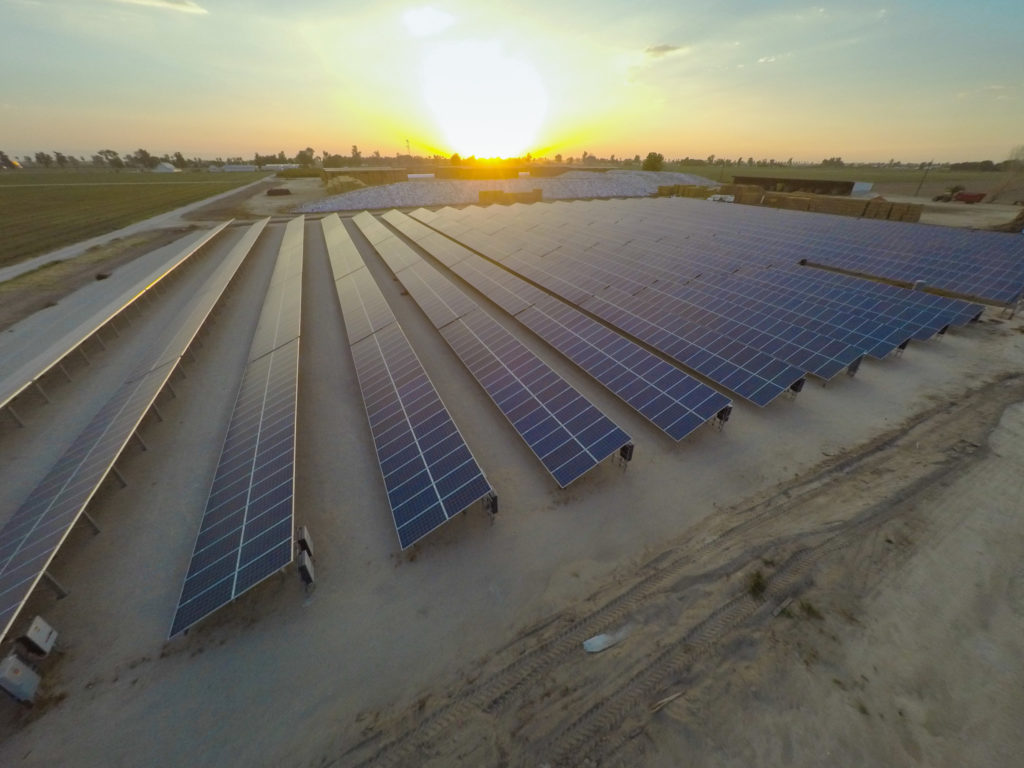
First the good news: The overall U.S. solar industry grew year over year by 13%, adding 2.5 GW-DC in the first quarter of 2018. Now the bad news: That's a 37% quarter-over-quarter decrease. So the latest quarterly U.S. Solar Market Insights Report, put out by the Solar Energy Industries Association (SEIA) and GTM Research, is a bit of a mixed bag. But the fact that the U.S. solar market has shown any growth at all, in light of heavy tariffs on module imports, flat residential growth and a significant decrease in "non-residential" installations, is a good sign that the industry may well weather the storms. “The solar industry had a strong showing in the first quarter,” said SEIA President and CEO Abigail Ross Hopper. “This data shows that solar has become a common-sense option for much of the U.S. and is too strong to be set back for long, even in light of the tariffs. States from California to Florida have stepped up with smart policies that will drive investment for years to come.” “This is a promising indicator that constraints to residential PV growth like segment-wide customer acquisition challenges and national installer pullback are abating,” GTM Senior Analyst Austin Perea said. “However, these problems are not entirely solved, as we’re seeing slowdowns in states with a relatively high penetration of PV installations.” The report notes that the three most active markets - New York, New Jersey and Maryland - will continue to contract, but Perea said he expects those declines to be offset by increases in emerging markets. In particular, Perea cited Florida - a market SolarWakeup has reported on extensively as it has taken off this quarter - as one of the significant bright spots as solar development skyrocketed in the state. In part, solar's growth in the Sunshine State is being fueled by increasingly active third-party solar options, like Sunrun's lease and Sunnova's loan programs. So far this year, Florida has added more solar than it did in all of 2016, which was the high-water mark for solar development in the United States so far. GTM says it expects growth in the overall U.S. market will be flat, although the analysis couldn't have foreseen the recent Chinese decision to decimate its own solar market which, if the module oversupply spills into the United States, could spark unanticipated growth in the U.S. solar market as markets that the tariffs had closed suddenly open again.10 Days Out, Chicago! Next Thursday, join your solar colleagues in Chicago for a full day event hosted by yours truly. We’ll be going over all segments of the solar market in Illinois under the Future Energy Jobs Act and putting the industry in a room to get matched up for dealmaking. Join me and register at solarwakeuplive.com
Incremental Cost Of Solar. The words, we can add solar at no incremental cost, are dying and will be replaced with, we can add solar at a savings of. Don’t take it from me, listen to Vote Solar’s Adam Browning in this epic tweet thread, which outlines the recent pricing for solar plus storage across the Country. Add this to the value generated by distributed generation and the future is sunny!
Get Involved, Get Efficient. Many of you listened to my interview with Andrew Birch about the solar permitting initiative that the solar industry is rallying around. The objective, in short, is to have solar installed instantly after a customer signs on to the project. The key result is gaining initial municipalities to opt in to accomplish this and take over the Country from there. Are you close to a mayor that wants more solar? Send me a note and let’s get this going. High quality solar installed quickly!
Innovate, Locally. Puerto Rico went through a horrible year rebuilding after Hurricane Maria. After every major power group talked a big game on changing the energy economy it seems that the local solar/storage sectors are taking on the future locally. I guess that makes sense because if you ask EEI to come up with a future vision for Puerto Rico it looks much like the 20th century grid. Self generation isn’t just for power, its for policies as well. Check out the SESA-PR group.
Changing Economies. When I was looking at solar markets across the world it always dawned on me that solar was creating new economies in those Countries. Now that solar is creating incremental savings (see above), it’s great to think about the double bottom line that our industry creates. Plus the environmental benefits to boot!
Have a great day!
News
Opinions:
Have a great day!
Yann
By Frank Andorka, Senior Correspondent
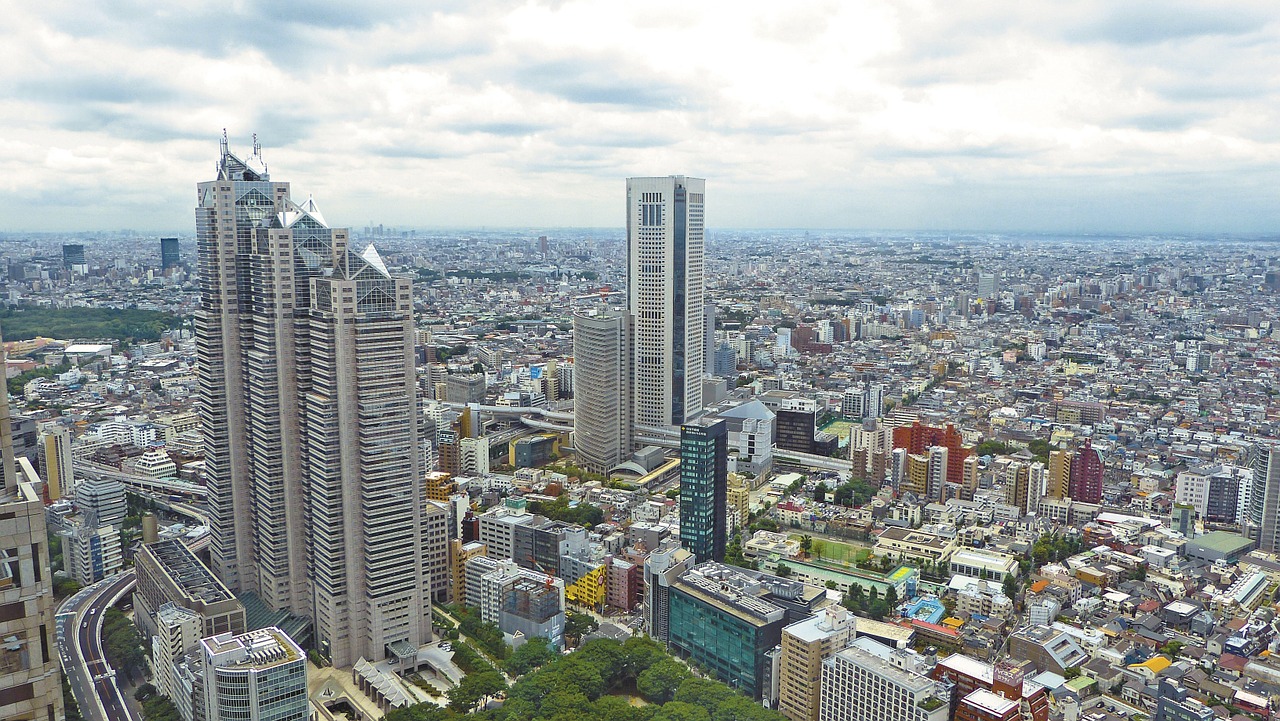 [caption id="attachment_10293" align="aligncenter" width="1280"] Tokyo, one of my favorite cities in the world, is about to do something REALLY dumb: build a solar road.[/caption]
By Frank Andorka, Senior Correspondent
If you've followed my writings over time, you know how I feel about solar roads. I find them to be one of the greatest boondoggles of all time, a brilliant grift that does nothing to advance the future of solar power but does get a lot of publicity for the people building it. The last time I visited the solar roads issue in 2017, the combiner box on the "test road" - more like a patch that a sidwalk, really - had caught on fire in Standpoint, Idaho, where this "demonstration" road has been in the works for what seems like forever (I guess if I really thought about it, I'd say I first saw the words "solar roadways" flash across my Facebook feed back in 2014). You'd think they would have been embarrassed. They were defiantly NOT embarrassed, any more than they were when a laminating machine foiled its big launch party in 2016. Why am I bringing this up again, other than to point and laugh AGAIN at people who for some reason think solar roadways are a useful use of solar technology, all evidence to the screaming contrary? Because according to the U.K. Independent newspaper, Tokyo - a city I once lovingly wandered looking for rodent traps (long story) - is trying to build a solar road in anticipation of its 2020 Olympics hosting. The Inependent writes:The new technologies are expected to be introduced on a trial basis at facilities owned by the Tokyo government and other locations as early as the next fiscal year.My advice would be to keep them away from any flammable buildings, is all I'm saying. The newspaper also reports that the solar roadways would be part of a widespread effort to brand Tokyo as an eco-friendly city, something I can attest it already is. I'd argue they don't need to put together some flashy tourist-trappy, Disney-esque attraction to prove it. Just take what you've already done and do a better job of marketing it to the world. Please. Seriously, you don't want any part of this travesty wrapped in a tragicomedy wrapped in solar panels. Take it from a longtime solar roadways observer: They do not work. More: Tokyo to build eco-friendly 'solar roads' ahead of 2020 Olympics
By Frank Andorka, Senior Correspondent

By Frank Andorka, Senior Correspondent
A group of solar + storage advocates has formed a new trade organization to fight for solar + storage solutions in Puerto Rico. The Solar and Energy Storage Association of Puerto Rico (SESA-PR) will promote the use of solar and energy storage to restore electricity to the entire island, something with which the U.S. protectorate has struggled since Hurricane Maria devastated the area last September. "At this crucial moment for Puerto Rico, we are calling on the people to join this effort that aims to guide and educate around the use of solar energy to reduce dependence on the traditional electrical system,” said Patrick James Wilson, President of SESA-PR. “We have assembled a group of experts who will participate in a broad discussion on the future of energy on the island and share their perspectives from various sectors such as government, finance and economic development.” One of the group's executives grew up in Puerto Rico and said in a release announcing the group's formation that the electric grid on the island has been broken since long before Maria ever visited the island. “I was born and raised in Puerto Rico," said Alejandro Uriarte, Director of SESA-PR and Managing Partner at New Energy Consultants. "Our electric grid was broken when I was growing up and is obviously in even worse condition today. Rebuilding after the hurricanes provides our island with a unique opportunity to upgrade our grid using better, more reliable technology like solar and battery storage that can make Puerto Rico an energy leader in the United States and across the world.” Together, SESA-PR and partners will be hosting the inaugural SESA Puerto Rico Energy Summit on June 25 and 26. The conference will focus on the future of energy for the island and provide the perspectives from the intersecting worlds of solar, energy storage, government, finance, and economic development. RSVP for the June 25 and 26 conference being held at the Intercontinental San Juan, in San Juan, Puerto Rico, HERE. SESA-PR hopes to serve as the voice of the renewable and distributed energy industry in rebuilding conversations in Puerto Rico, Washington, D.C., and nationally.