

By Frank Andorka, Senior Correspondent What Happened: Quartz Media reports that "Saudi Arabia’s crown prince, Mohammed Bin Salman, has signed a memorandum of understanding with Japanese multinational Softbank to build 200 GW of solar power by 2030 at a cost of $200 billion."
By Frank Andorka, Senior Correspondent What Happened: Quartz Media reports that "Saudi Arabia’s crown prince, Mohammed Bin Salman, has signed a memorandum of understanding with Japanese multinational Softbank to build 200 GW of solar power by 2030 at a cost of $200 billion."
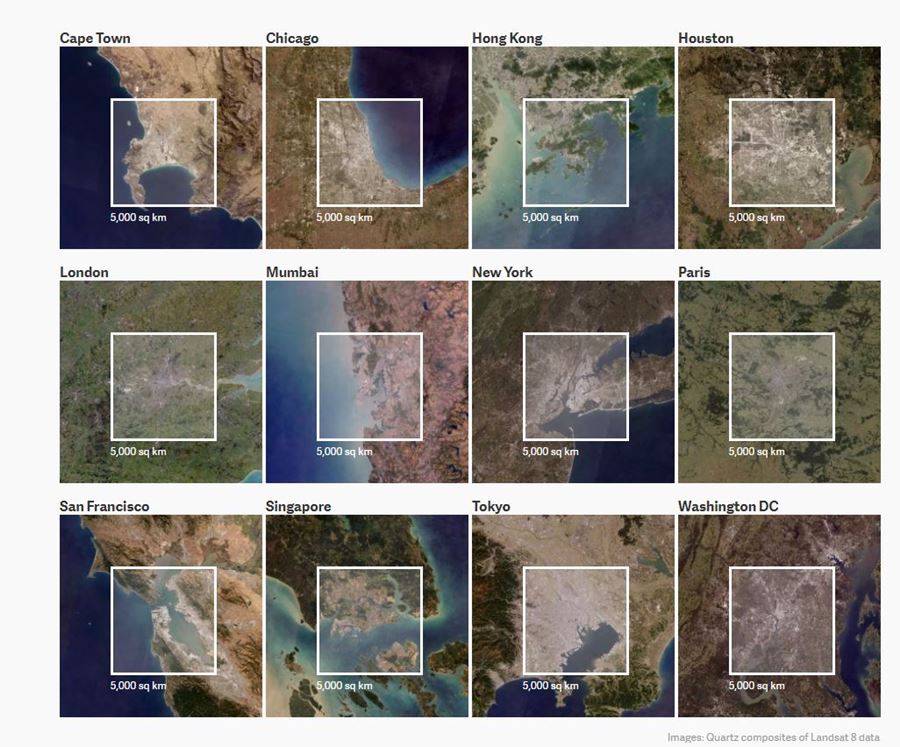
- The math is pretty simple: The world's current largest solar farm is the 1 GW Kurnool Ultra Mega Solar Park in India, which Quartz calculated covers 24 square miles.
- So if you multiply that by 200 - which is the factor bigger that the plant in Saudi Arabia would be - that would cover 5,000 square miles in total.
- Fortunately, Saudi Arabia can spare the land - 5,000 square miles is less than 1% of the country's total area (830,000 square miles).
 SolarWakeup’s View: Aw, now, Jenny (Chase) - why do you have to be like that? Why are you trying to stomp on the crown prince of Saudi Arabia's solar dreams?
Chase, a well-respected solar analyst with Bloomberg New Energy Finance, had a delightfully snarky comment on Twitter about Saudi Arabian Crown Prince Mohammed Bin Salman's MOU with a Japanese bank to build a 200 GW solar plant at a cost of $200 billion: "I’ve probably made more binding agreements to grab a coffee."
But frankly, I don't care if the plan ever comes to fruition. The fact is that someone is dreaming big in a world that sometimes can seem increasingly, depressingly small.
SolarWakeup’s View: Aw, now, Jenny (Chase) - why do you have to be like that? Why are you trying to stomp on the crown prince of Saudi Arabia's solar dreams?
Chase, a well-respected solar analyst with Bloomberg New Energy Finance, had a delightfully snarky comment on Twitter about Saudi Arabian Crown Prince Mohammed Bin Salman's MOU with a Japanese bank to build a 200 GW solar plant at a cost of $200 billion: "I’ve probably made more binding agreements to grab a coffee."
But frankly, I don't care if the plan ever comes to fruition. The fact is that someone is dreaming big in a world that sometimes can seem increasingly, depressingly small.
 Hell, it strikes me full of awe, and I'm maybe the most cynical person in the solar industry. So Jenny, you know I got your back - but for now, let's let this dream linger until there's a real reason to diss it.
(Oh, and I'm buying you a coffee at Intersolar North America if you're there - you can take that agreement to the bank.)
More:
What Saudi Arabia’s 200 GW solar power plant would look like—if placed in your neighborhood
Bonus:
Because how, honestly, could I not?
https://youtu.be/-p6OH7FoWoQ
Hell, it strikes me full of awe, and I'm maybe the most cynical person in the solar industry. So Jenny, you know I got your back - but for now, let's let this dream linger until there's a real reason to diss it.
(Oh, and I'm buying you a coffee at Intersolar North America if you're there - you can take that agreement to the bank.)
More:
What Saudi Arabia’s 200 GW solar power plant would look like—if placed in your neighborhood
Bonus:
Because how, honestly, could I not?
https://youtu.be/-p6OH7FoWoQ
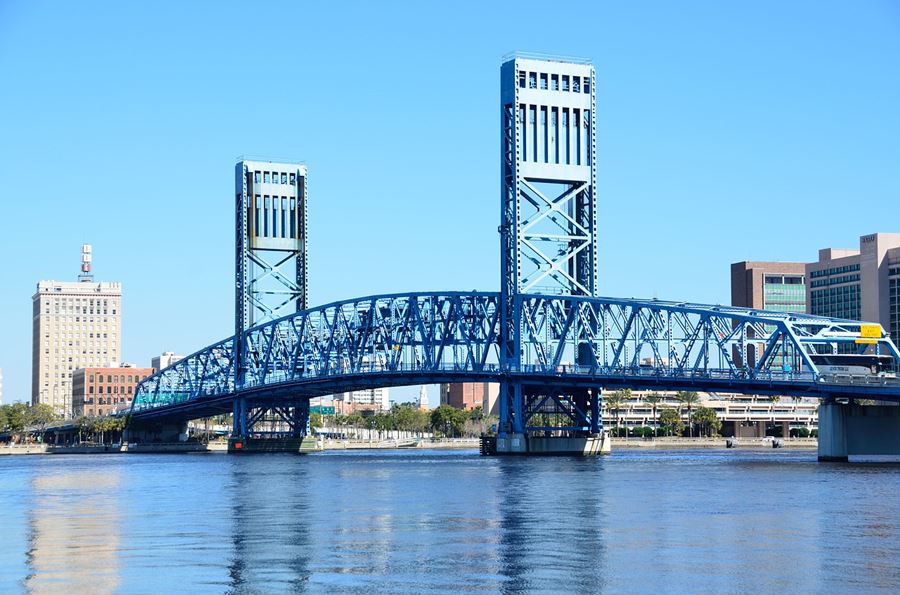
By Frank Andorka, Senior Correspondent What Happened: Wow. Just. Wow. Jinko Solar's investment in Jacksonville, Florida, just keeps getting smaller with each passing story, having fallen from initial reports of more than $400 million in local investment and more than 800 jobs.
By Frank Andorka, Senior Correspondent What Happened: Wow. Just. Wow. Jinko Solar's investment in Jacksonville, Florida, just keeps getting smaller with each passing story, having fallen from initial reports of more than $400 million in local investment and more than 800 jobs.
- In three months, the level of investment from the Chinese solar module manufacturer has fallen from $410 million to $50 million (an 88% decrease).
- Meanwhile, the city keeps throwing more money at the module manufacturer. Having initially approved slightly more than $23 million in incentives, they approved nearly $3.5 million last week.
- So for those of you keeping score at home: Jinko is now going to invest around $50 million in the factory, while the city and state are still investing around $57 million. That's a 16% return - not bad for not doing any visible work, is it?
 SolarWakeup’s View: You have to wonder whether poor Jacksonville, Florida, has caught on yet to the fact that they are the victim of a long con, being masterfully orchestrated from China by Jinko Solar.
Back in January - January 19, in fact - I broke the story that Jinko Solar was in negotiations with the city (under the clever pseudonym "Project Volt," which to be fair should have been the name of a Chevy plant, not Jinko) to build a $410 million factory in the city and hire nearly 800 people. Five days later, the city council approved its $23 million portion of what is supposed to be a $54 million state/city incentive package to bring this stalwart of solar module manufacturing to the city.
Ever since then, Jinko has been cagey about the investment, even after confirming its involvement obliquely in a throwaway line in a press release. And more recent reporting has said that Jinko has cut its investment by 88% to $50 million, while there has been no reporting that the city/state incentive package has gone down at all. In fact, as I mentioned above, the city threw nearly $4 million more at the deal just last week.
SolarWakeup’s View: You have to wonder whether poor Jacksonville, Florida, has caught on yet to the fact that they are the victim of a long con, being masterfully orchestrated from China by Jinko Solar.
Back in January - January 19, in fact - I broke the story that Jinko Solar was in negotiations with the city (under the clever pseudonym "Project Volt," which to be fair should have been the name of a Chevy plant, not Jinko) to build a $410 million factory in the city and hire nearly 800 people. Five days later, the city council approved its $23 million portion of what is supposed to be a $54 million state/city incentive package to bring this stalwart of solar module manufacturing to the city.
Ever since then, Jinko has been cagey about the investment, even after confirming its involvement obliquely in a throwaway line in a press release. And more recent reporting has said that Jinko has cut its investment by 88% to $50 million, while there has been no reporting that the city/state incentive package has gone down at all. In fact, as I mentioned above, the city threw nearly $4 million more at the deal just last week.
No April Fools. Use APRIL40 for 40% off your ticket to our exclusive event in San Francisco. There’s a single sponsor interview slot left if you are looking to reach the SolarWakeup audience with your message. As anyone that has come to our previous events will say, this isn’t the biggest crowd but its the most influential. Again, use APRIL40 to get 40% off your tickets.
Cheap Solar, Now Value. The BNEF report pretty much confirms reality. The battle for price of energy output has been won by renewables. No fuel cost assumptions make certain of that fact. There is no longer the need to battle for cheaper now that we’re sub 3 cents in sunny areas. Now is the time to talk about system value, value of DG, value of storage and putting some of that value into the ecosystem. That means contractors investing in higher margins for higher quality. Buying better roof mounting that doesn’t leak. Most of all we all need to invest in margins.
Legacy Power, Legacy Tricks. First Energy has been pushing for coal and nuclear subsidies through all the avenues, FERC, DOE and the White House. On Friday, it asked for emergency bailouts for the power plants that are not providing value to the system and have the Trump administration guarantee profits to the ailing power plants. After no positive response on the request, First Energy went to bankruptcy court late on Saturday to file for chapter 11 and look to restructure debt. Within the last 12 months I still had conversations with private equity firms that were open to acquiring these types of power plants but I have to think that those days are quickly ending.
Subsidized Manufacturing From Jinko. I enjoy the irony of the solar manufacturing plant receiving subsidies from the Florida government in response to a global tariff against solar modules because the foreign manufacturers are…subsidized. Explain the nuance of a State that is anti-solar, anti-competition for solar projects that is making the headlines by putting together subsidies with guarantees from ratepayers. This isn’t Jinko’s fault, they are a bystander in this and I want them in Florida. But more importantly, I want solar to be allowed to compete here.
Opinion
News
Opinions:
Have a great day!
Yann
By Frank Andorka, Senior Correspondent What Happened: For. The. Win. A new report by Bloomberg New Energy Finance suggests renewables' prices are falling so quickly that coal is dead and even natural gas may be on its deathbed.
By Frank Andorka, Senior Correspondent What Happened: For. The. Win. A new report by Bloomberg New Energy Finance suggests renewables' prices are falling so quickly that coal is dead and even natural gas may be on its deathbed.
- The cost of new solar plants dropped 20% over the past 12 months, while onshore wind prices dropped 12%, according to the latest Bloomberg New Energy Finance (BNEF) report.
- Since 2010, the prices for lithium-ion batteries — crucial to energy storage — have plummeted a stunning 79 percent, the report also indicates.
- The kill quote: “The economic case for building new coal and gas capacity is crumbling,” as BNEF’s chief of energy economics, Elena Giannakopoulou, told Bloomberg.
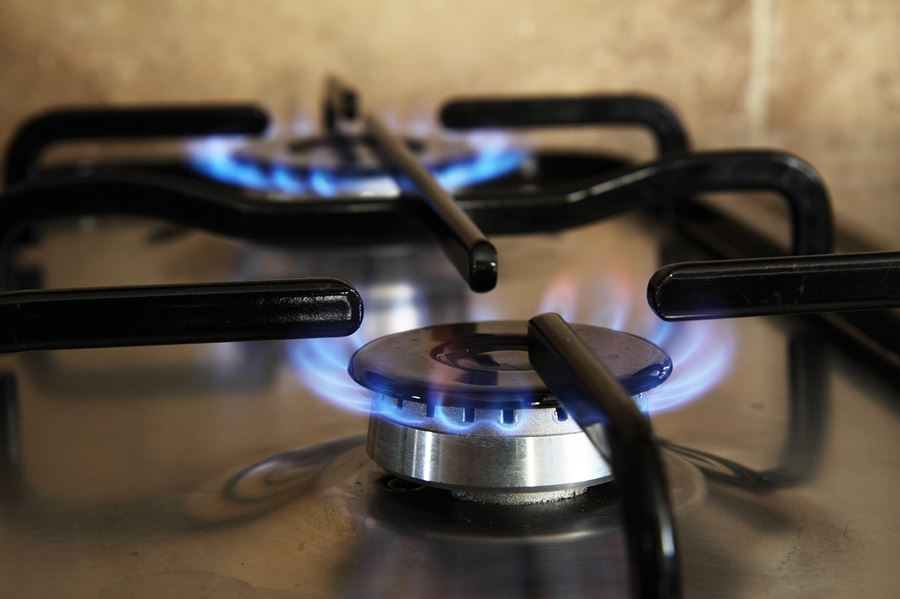 How long will the blue flame of natural gas continue to burn as an alternative to fossil fuels? If Bloomberg New Energy Finance is right, not much longer.[/caption]
SolarWakeup’s View: Lookie here - it seems like I might be right about a thing.
Let's back up for a second. On Monday, I wrote about the theory that renewables may be falling in price so quickly that natural gas, long touted as the most effective "transition energy," might be surpassed by renewables soon. As evidence, I cited recent decisions in California's and Arizona's regulatory bodies to deny utilities the right to build new peaker natural gas plants as evidence. And near the end, I wrote this:
How long will the blue flame of natural gas continue to burn as an alternative to fossil fuels? If Bloomberg New Energy Finance is right, not much longer.[/caption]
SolarWakeup’s View: Lookie here - it seems like I might be right about a thing.
Let's back up for a second. On Monday, I wrote about the theory that renewables may be falling in price so quickly that natural gas, long touted as the most effective "transition energy," might be surpassed by renewables soon. As evidence, I cited recent decisions in California's and Arizona's regulatory bodies to deny utilities the right to build new peaker natural gas plants as evidence. And near the end, I wrote this:
Energy storage is the key. As the technology gets better and the prices come down, the need for a transition energy like natural gas becomes increasingly less important.And four days later, Think Progress alerted me to a new Bloomberg New Energy Finance report that said, well, nearly exactly that.
“The economic case for building new coal and gas capacity is crumbling,” as BNEF’s chief of energy economics, Elena Giannakopoulou, told Bloomberg.Incredible, right? I started writing about solar in 2011, and you could never have convinced then me that by 2018 we might already be "Bye, Felicia"-ing natural gas into history. (Which, as an aside, makes promises to "save coal" or "revive coal" even more ludicrous, but I digress.) So here's to natural gas who, I presume, will desperately try to hang on to its 15 minutes of fame by hook-and-crook - but ultimately, in the not-too-distant future, it will end up in the ash heap of history. Bye, natural gas. More: Will Natural Gas Lose Its Place As A Transition Energy? Stunning drops in solar, wind costs mean economic case for coal, gas is ‘crumbling’ Bonus: I love etymological videos. For those of you who don't know, here's the etymology of "Bye, Felicia." https://youtu.be/HAeHj201afQ